

Esquivas — Escapes
Capoeira defends with flow, not force. Master the escapes and you'll never need to block a kick again.
Back to ProgramMartial Art
How Do I Defend Myself?
Capoeira has a unique way to defend against attack: we escape rather than block, giving the game a nice flow.
Esquivas distinguish capoeira from other martial arts. Many of the attacks in capoeira are fully committed kicks that would cause injury if you tried to block instead of dodging them. Blocking an attack can also upset the flow of the game.
In capoeira, we go with the flow of the attack. Blocks do sometimes occur when one player is so caught off guard that they block instinctively. This generally happens when defending against hand attacks rather than kicks.
- The escape follows the direction of the kick.
- Don't be afraid to get close to the person attacking.
- Why capoeira escapes instead of blocks
- Cocorinha — the low squat escape
- Esquiva Lateral — side escape
- Esquiva Recuada — backward escape
- Esquiva Baixa — low escape
- How to combine ginga + escaping
- Rolê — rolling movement on the floor
- Negativa — low ground escape & transition
- 12 video lessons with guided practice
Watch First
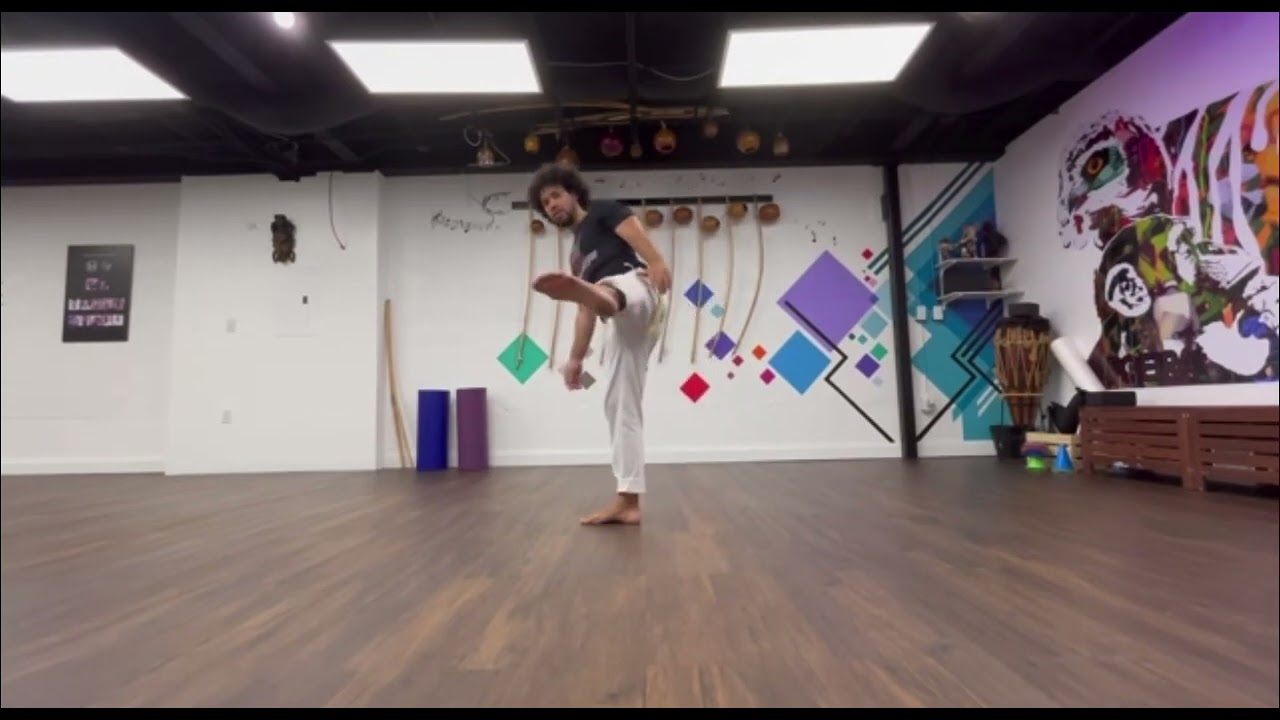
An overview of how capoeira uses escapes instead of blocks, and why this gives the game its unique flow.
Escape 1
Cocorinha — Low Squat
Cocorinha is a variation of the word "cócoras," which means squatting. It is one of the simplest defense movements. With feet flat on the ground, squat with knees to your chest, close to the body. Cover the side of the torso and head with one arm, while the other hand is on the floor to the side of the body for support.
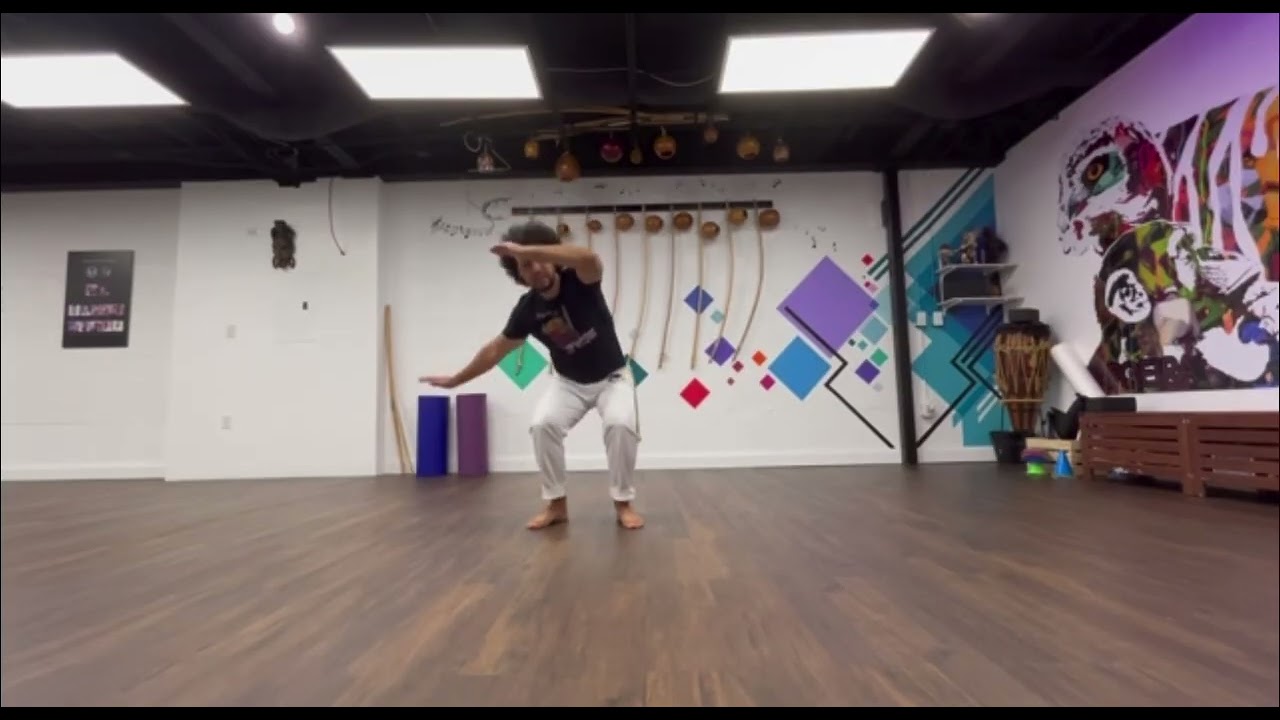
Learn the fundamental low squat escape — the most common defense in capoeira.
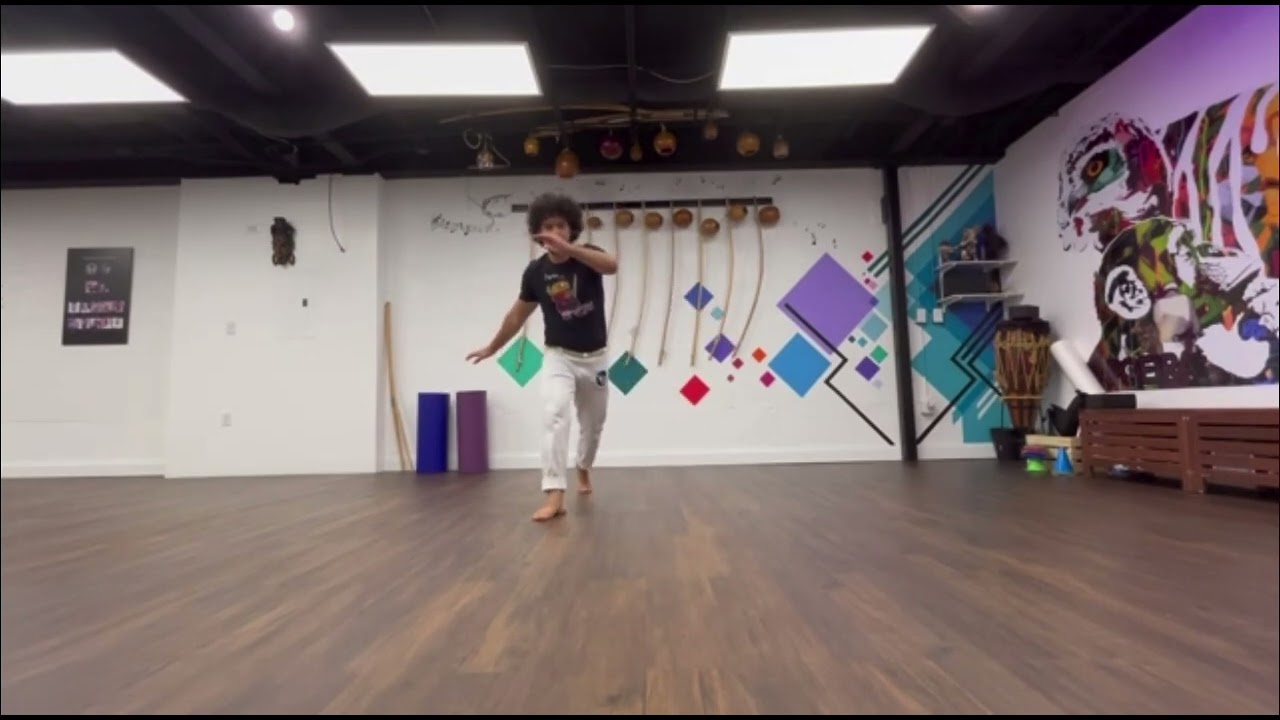
Explore a variation of the cocorinha to expand your defensive range.
Always protect your head first. The arm covering the head is your shield — never let it drop.
Escape 2
Esquiva Lateral — Side Escape
In side escape, or side dodge, the feet are parallel. Bring the torso down and to the side. Reach one hand over the head or in front of the face for protection.
Always keep a strong base. At the same time, try to relax your body to be able to quickly react. Capoeira moves should feel natural to your body. Be aware of the alignment of your knees and feet. More important than keeping your knees behind your toes, make sure your knees and feet are turned out at the same angle.
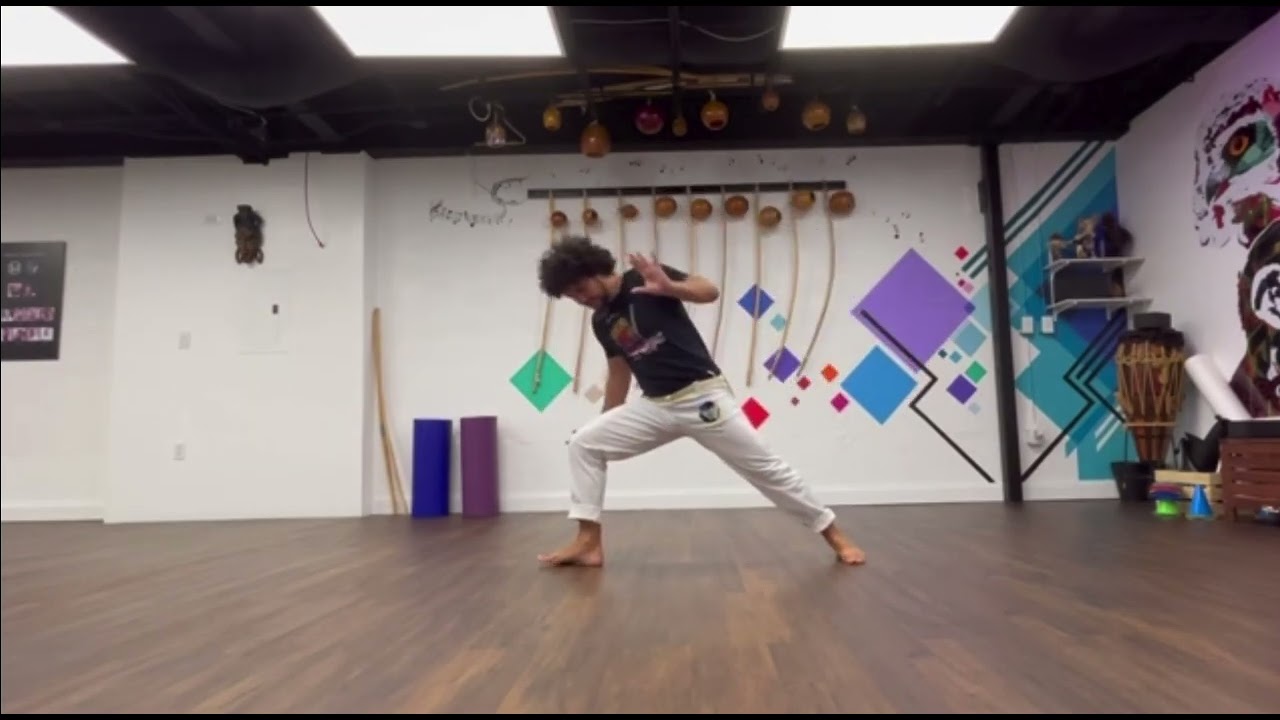
Master the side escape — one of the most versatile defenses in capoeira.
"I commit today to doing what will make me happy."
Escape 3
Esquiva Recuada — Backward Escape
Esquiva recuada is similar to esquiva lateral, except your body is perpendicular to your opponent, rather than facing them. This creates more distance and is ideal when the kick comes straight at you.
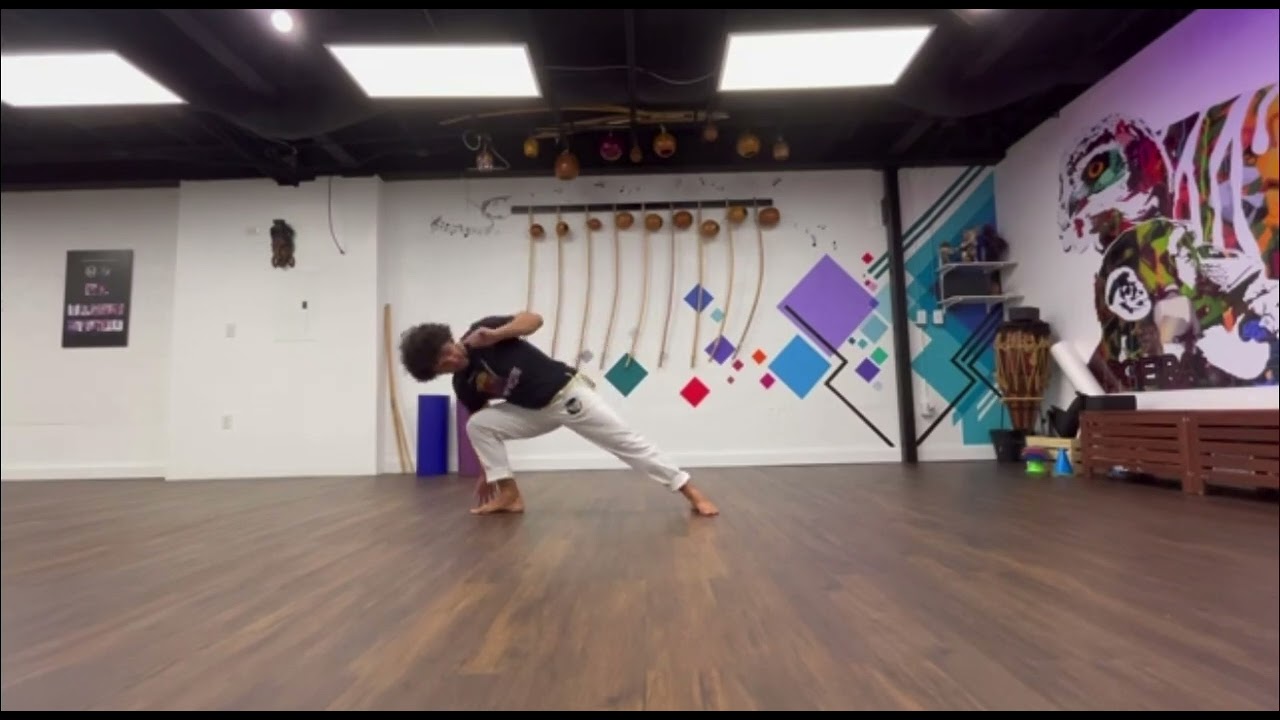
Step back and turn perpendicular — a powerful escape that creates space and opens counterattacks.
Escape 4
Esquiva Baixa — Low Escape
This dodge looks like a lunge, but the torso is bent forward, bringing the head low. If the right foot is in front, the right hand is on the floor for stability, and the left hand is used to guard the face and head.
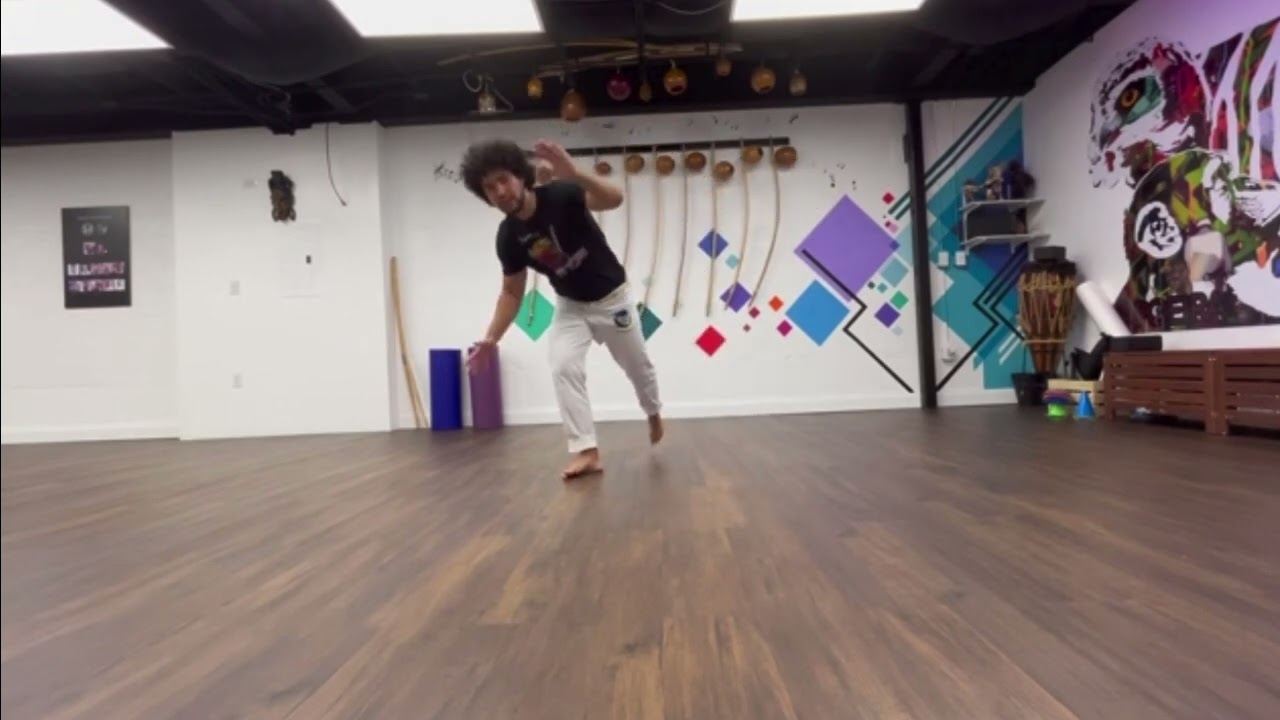
Drop low into a lunge with head down — a deep escape that takes you under high kicks.
All Escapes
The 4 Core Escapes
Tap each escape to review the key technique points. Master all four and you'll have a complete defensive vocabulary.
Squat with feet flat, knees to chest. Cover the head and torso with one arm, other hand on the floor for support.
- Feet flat on the ground, not on toes
- Knees close to the chest
- One arm covers head and side of torso
- Other hand on the floor for balance
- Head protected at all times
Feet parallel, torso drops to the side. One arm reaches over the head or in front of the face for protection.
- Feet stay parallel — do not step out
- Torso drops to the side, not forward
- Arm reaches over head to protect
- Knees and feet aligned at the same angle
- Strong base — stay grounded
Similar to esquiva lateral but your body turns perpendicular to your opponent, creating more distance.
- Body turns perpendicular — not facing opponent
- Weight shifts to the back leg
- Torso drops and turns away from the kick
- Arm still protects the head
- Eyes stay on your partner
A deep lunge with the torso bent forward, head low. Hand on the floor for stability, other hand guards the face.
- Front foot forward, torso bends toward it
- Head drops low — below the kick
- Same-side hand on the floor for support
- Opposite hand guards the face
- Keep the back leg strong for quick recovery
Combining Moves
Be Comfortable with Ginga + Escaping
Dedicate your practice to mastering all the escapes from the ginga and smoothly returning to the ginga, switching sides without confusion or missteps. This proficiency ensures you can confidently and effectively escape from any kick with ease and strength.
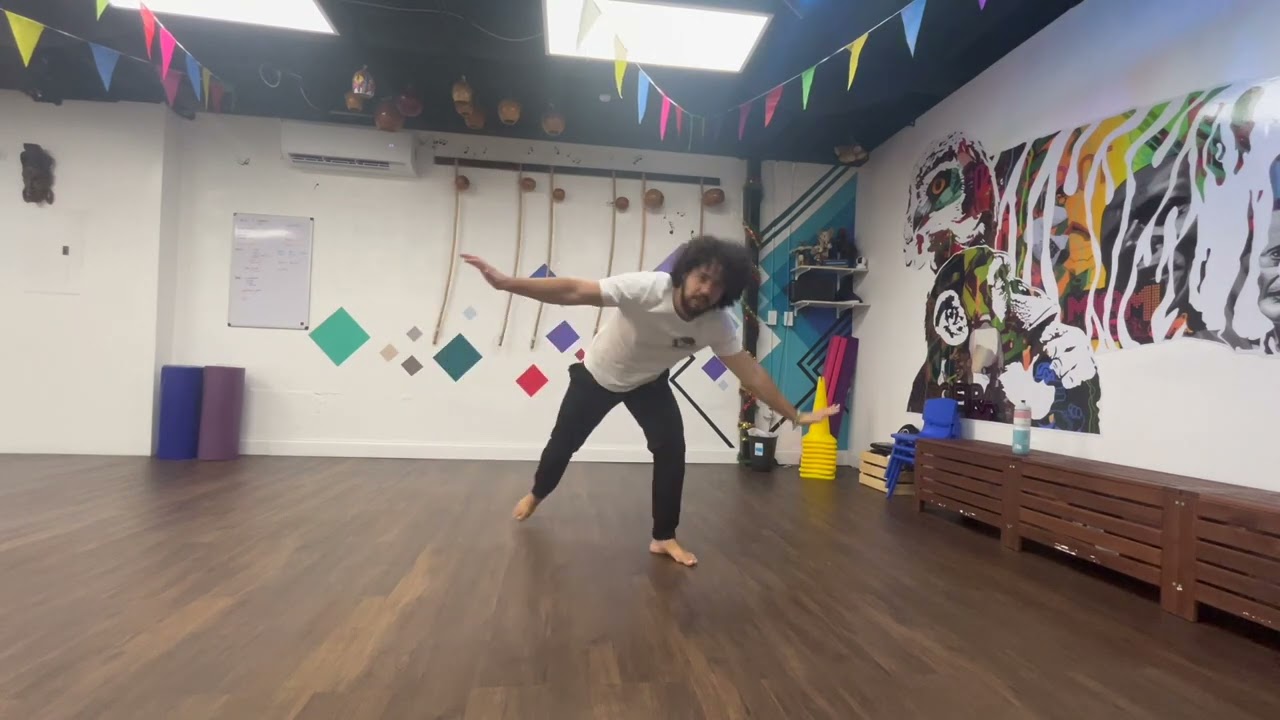
See how to smoothly connect the ginga with all four escapes and return to the ginga without losing rhythm.
Your move is a response to your partner's move. Any movement can be used as a way to escape, depending on the circumstances. Try to use the bases you learn in this program, but keep in mind that you are free to adapt depending on the situation.
Picture how you can use these moves to escape from a kick:
Ginga
Use the ginga itself to step out of the way of a kick
Another Kick
Counter with your own kick as a form of escape
Acrobatic Move
Use an au or flip to escape and create distance
Ground Movement
Rolê — The Roll
Along with the ginga and au, this "rolling" motion is one of the basic ways of moving around in the game. It is essentially a spin to one side. Rolê is used to get up from the floor in a more comfortable and effective way, and also to connect other moves.
- Circular: The movement is circular and the same leg does the steps.
- Linear: The movement is in a line and you alternate the leg when you step.
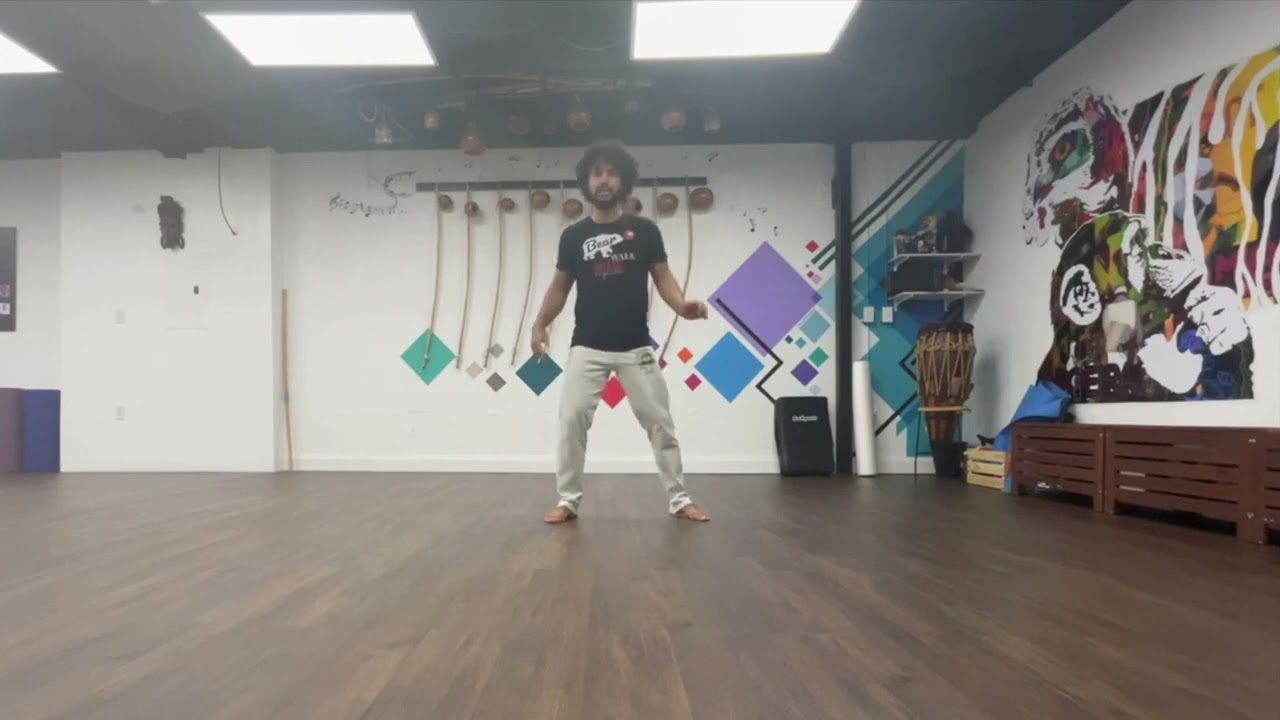
Learn the rolling ground movement — essential for getting up safely and connecting floor moves.
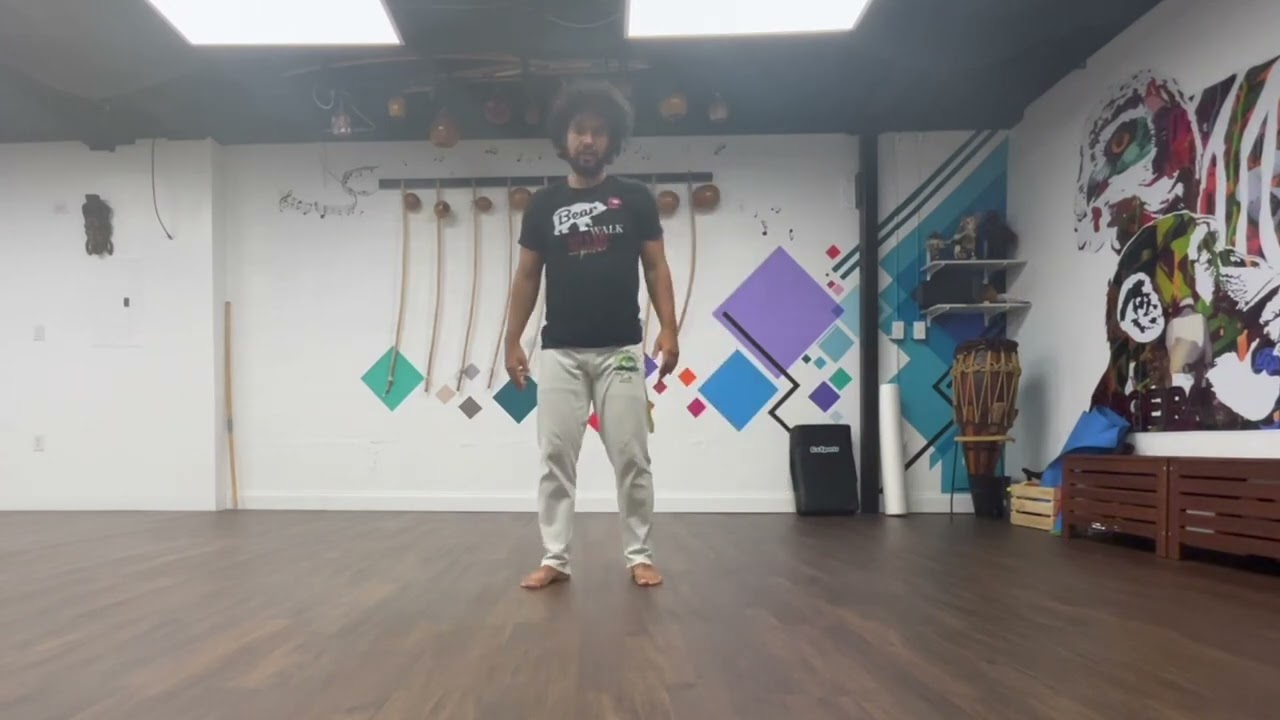
Common errors that beginners make with the rolê and how to fix them.
Avoid these mistakes:
Ground Escape
Negativa
This can be an escape and a transition move. You are low to the ground. One leg is bent, with weight on the ball of the foot. The other leg is extended forward, and the body weight is supported with one hand on the ground. The other hand protects the face.
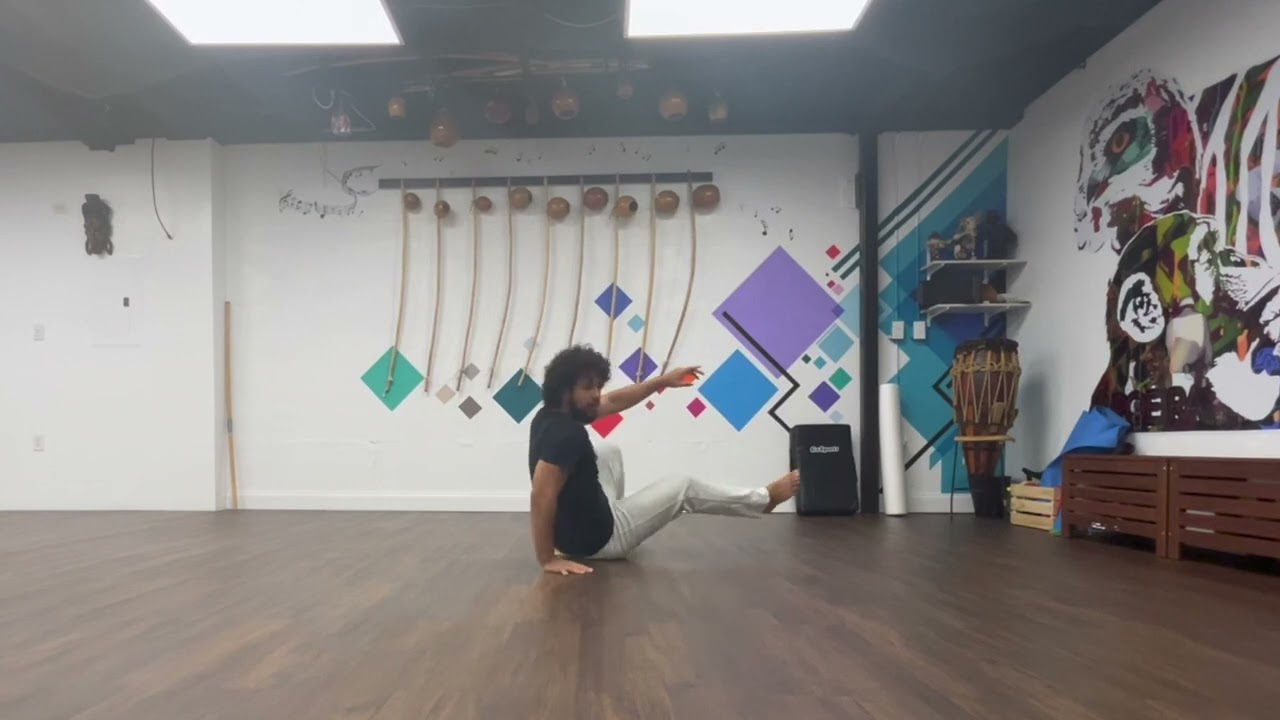
Start with the negativa push up to get comfortable with the position and build arm strength.
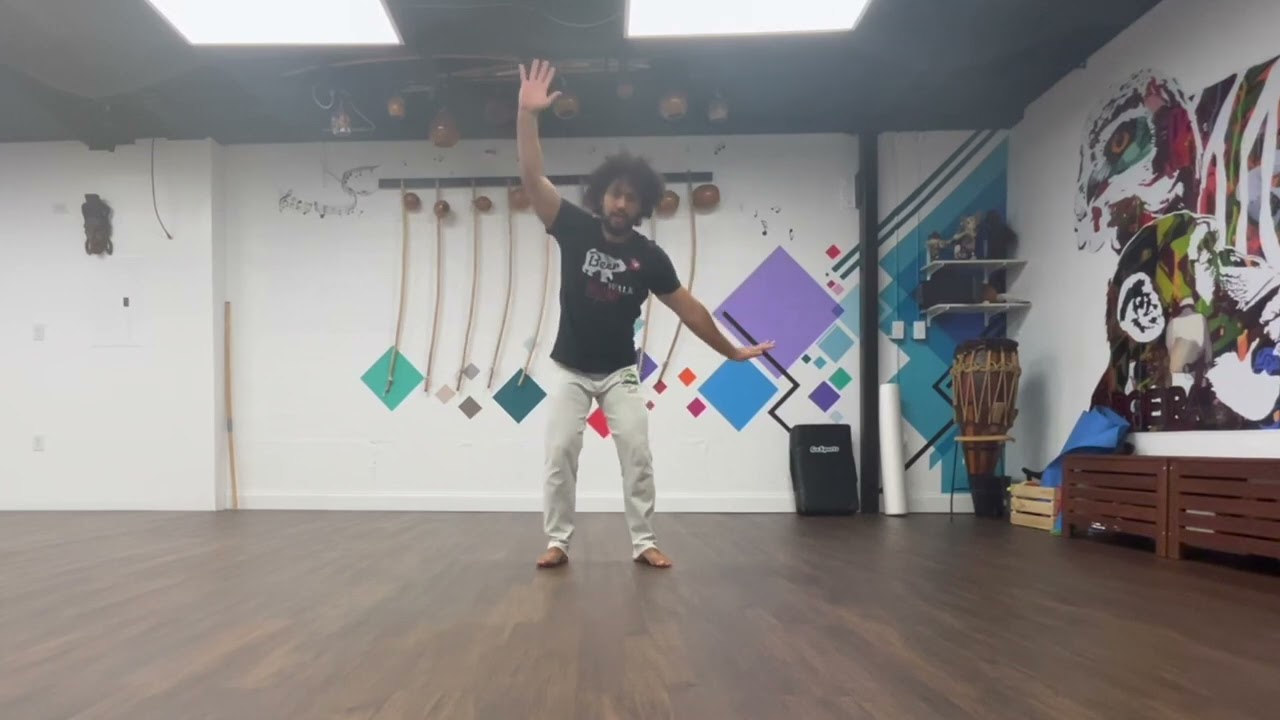
Combine cocorinha + negativa + rolê to build up to the full negativa position.
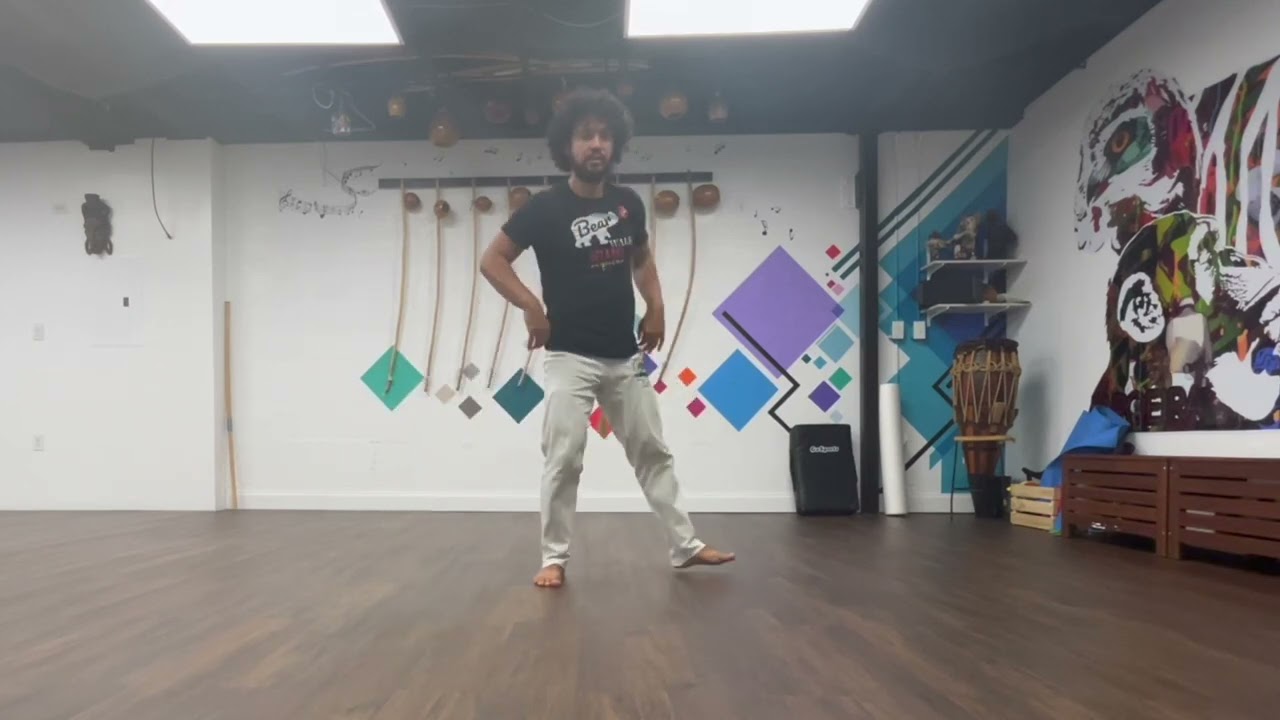
The backward negativa — a deeper variation that creates more distance from your opponent.
Exercise 2 — Combining Moves
Finding the right position and balance in negativa can be hard in the beginning. To build up to it, combine 3 moves together: Cocorinha → Negativa → Rolê. Practice this sequence until it feels natural before attempting the negativa on its own.
"A positive statement can counteract a negative belief that you are holding onto. Positive affirmations can help reprogram your thought patterns and change the way you think and feel."
Introduction to Escapes
An overview of how capoeira uses escapes instead of blocks, and why this gives the game its unique flow and beauty.
Cocorinha 1
Learn the fundamental low squat escape — feet flat, knees to chest, arm protecting the head.
Cocorinha Variation
A variation of the cocorinha to expand your defensive options in the game.
Esquiva Lateral — Side Escape
Feet parallel, torso drops to the side. One arm reaches over the head for protection.
Esquiva Recuada — Backward Escape
Body perpendicular to opponent — creates more distance and opens counterattack opportunities.
Esquiva Baixa — Low Escape
Deep lunge with torso bent forward, head low. Hand on floor for stability, other hand guards the face.
Ginga + Escaping
Connect the ginga with all four escapes and return smoothly — the foundation of the full capoeira game.
Rolê
The rolling ground movement — essential for getting up safely and connecting floor moves in the game.
Rolê — Mistakes to Avoid
Common errors beginners make with the rolê and exactly how to correct them.
Negativa Push Up
Build comfort and arm strength in the negativa position with this foundational exercise.
Cocorinha + Negativa
Combine cocorinha + negativa + rolê to build up to the full negativa position step by step.
Negativa Recuada
The backward negativa — a deeper variation that creates more distance and opens new attack angles.