

Born From
Chains.
Alive in
Every Roda.
Capoeira is not a trend. It is a living system built by people who had everything taken from them — and refused to disappear. This is its story. And now, it is yours.
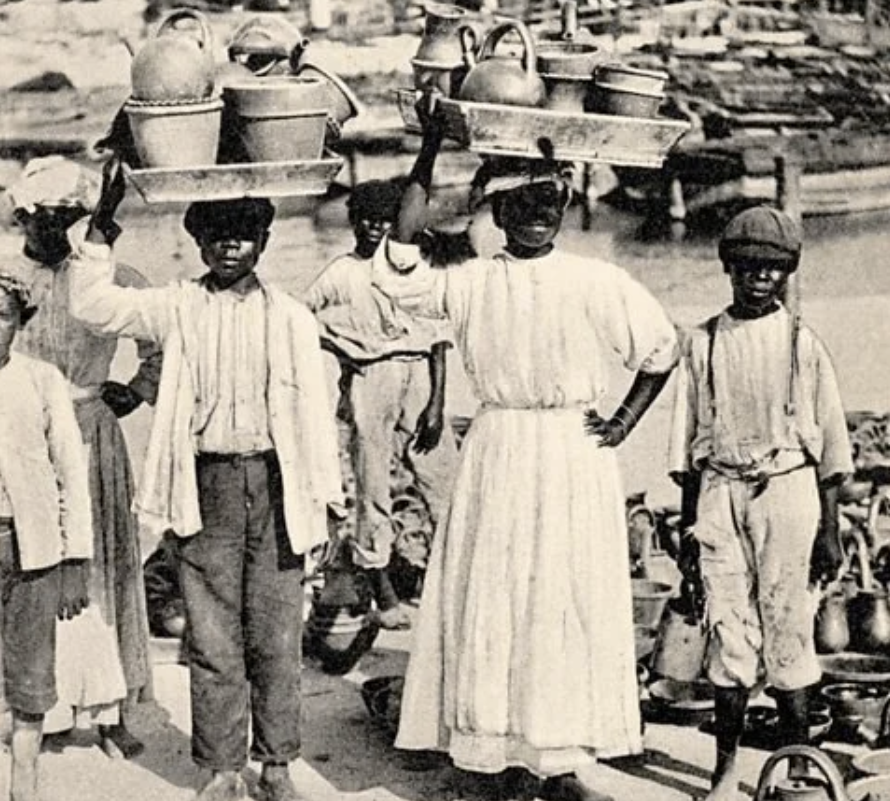
The World They Were Brought Into
Brazil received more enslaved Africans than any other country in the Americas. Millions were taken from West and Central Africa — from cultures where movement, music, and community were not separate things. They were one.
Enslaved people were forbidden from carrying weapons, training openly, or gathering freely. They were stripped of language, name, and identity. What they could not be stripped of was memory — the memory of how to move, how to listen, and how to resist.
"What looked like dance was training. What looked like play was strategy. What looked like celebration was preparation."
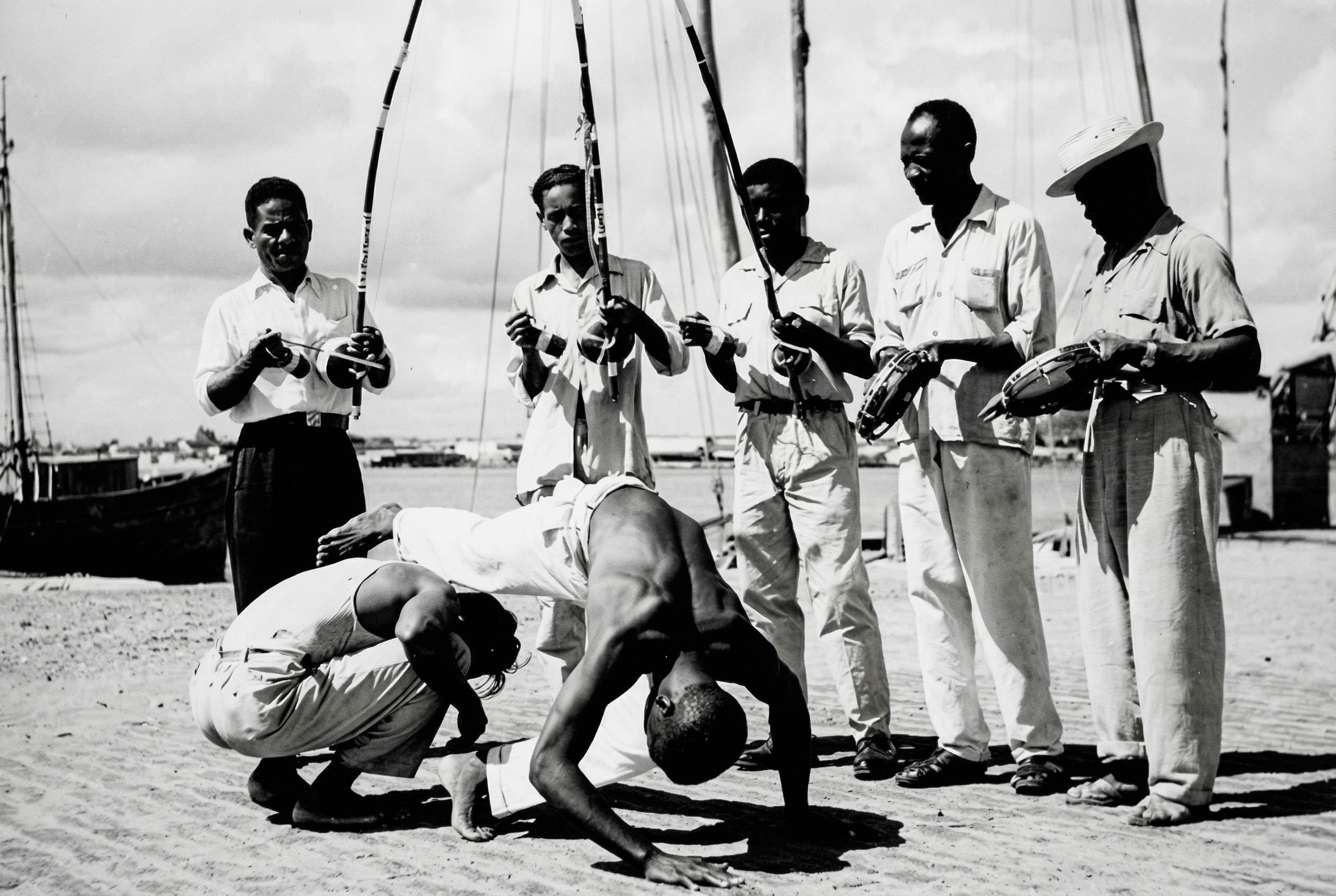
From this pressure, something extraordinary was born. A hidden system disguised as movement. A fighting art disguised as a game. A culture disguised as entertainment. That system was Capoeira.
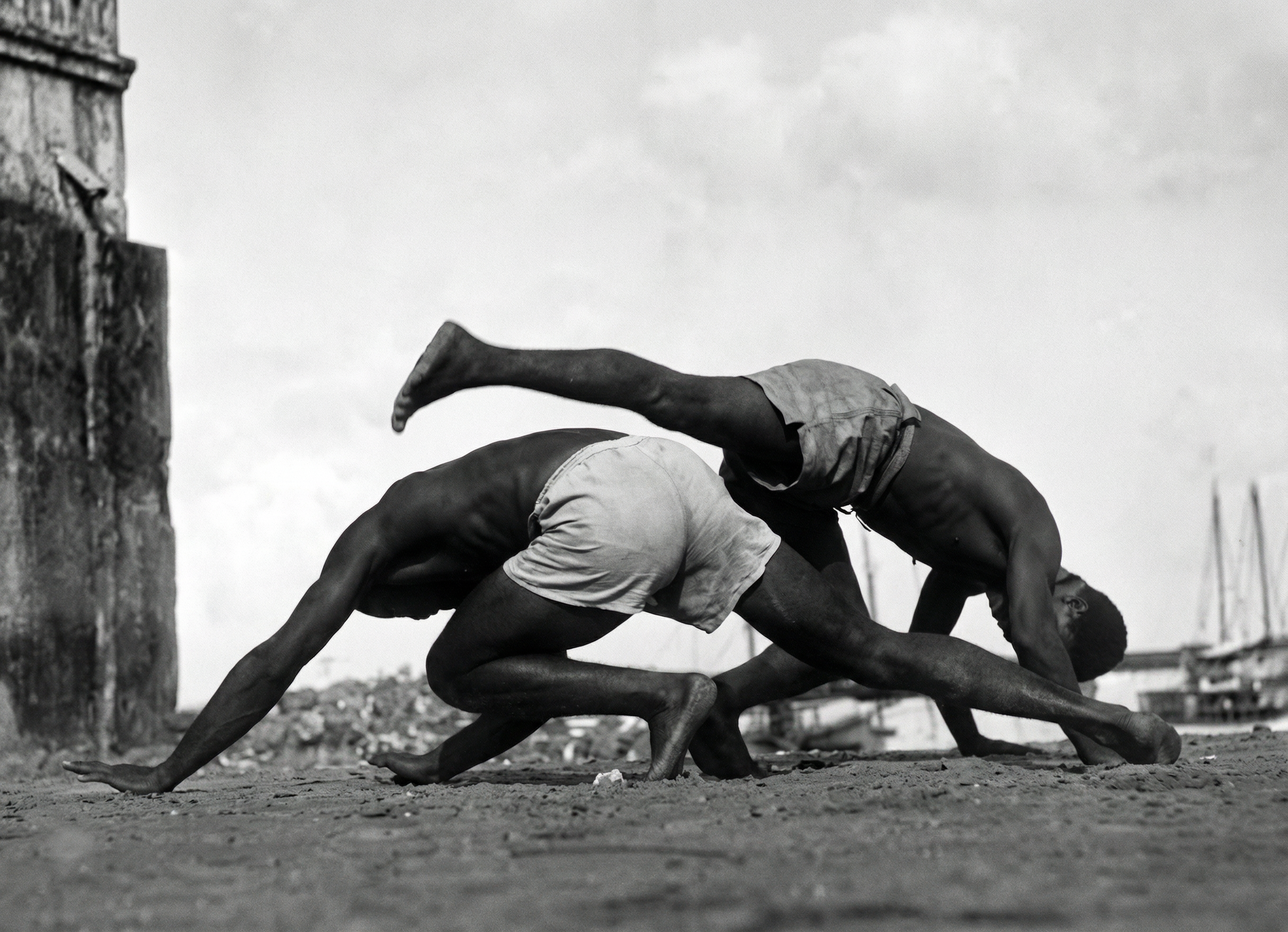
So they became the weapon.
They Built Communities in the Forest
Many enslaved people escaped and formed independent communities called quilombos. The most powerful was Quilombo dos Palmares — a free nation that resisted colonial forces for nearly a century. Capoeira was its training system, its discipline, and its spirit.
When slavery was abolished in 1888, the formerly enslaved received nothing. No land. No education. No support. Capoeira moved from the plantations into the ports, the streets, and the poor neighborhoods of Brazilian cities.
"Capoeira survived because it was never just a martial art. It was a way of being human when the world tried to make you less than that."
In 1890, the Brazilian government criminalized Capoeira entirely. Practitioners were arrested, imprisoned, and hunted. For decades, the art lived underground — passed orally, in secret, from generation to generation. It survived because people chose to protect it.
Mestre Bimba & Mestre Pastinha
In the 1930s, while Capoeira was still illegal, two men made a decision that would change the art's future. They chose different paths — and together, they saved everything.
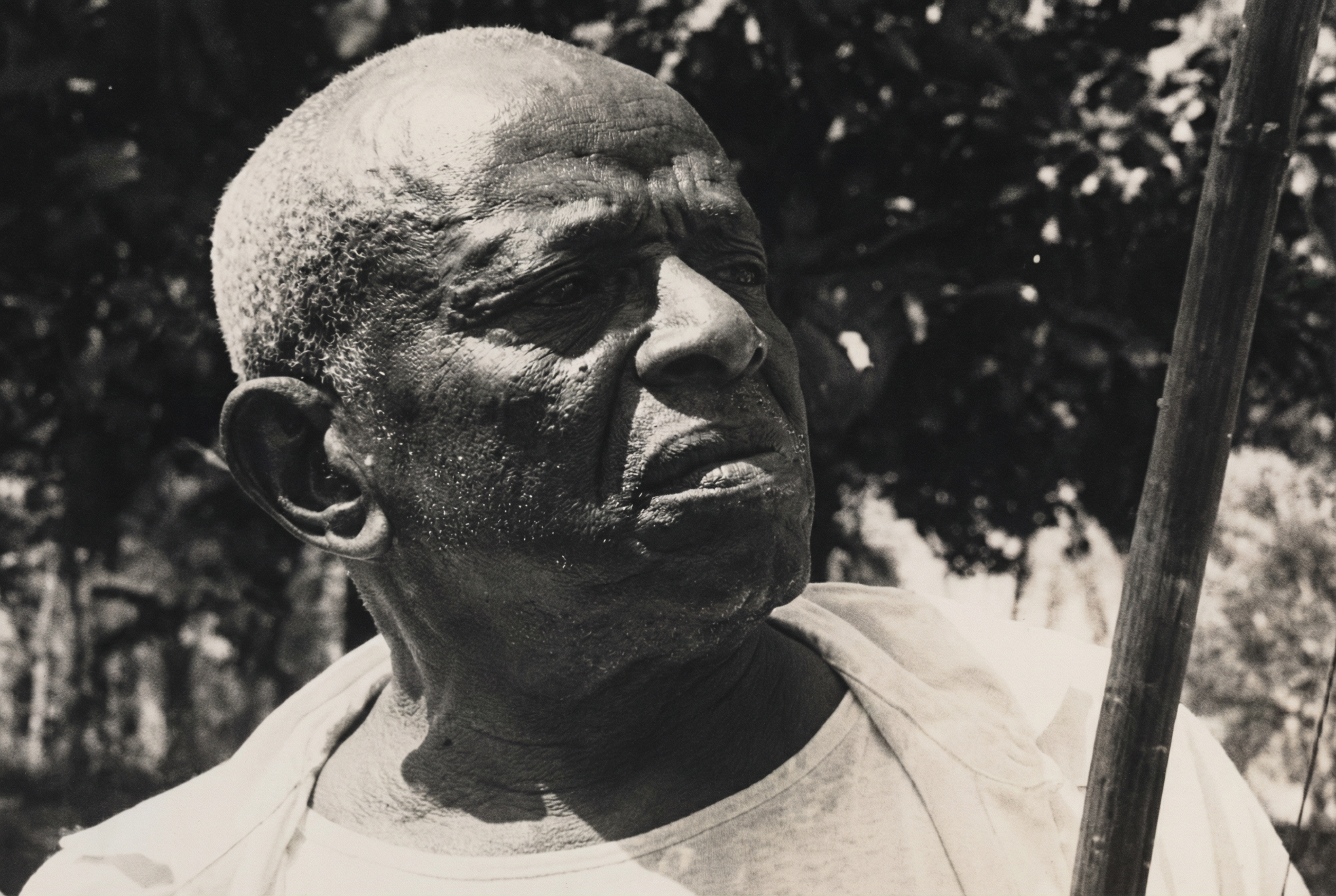
Manuel dos Reis Machado — known as Mestre Bimba — created a structured teaching method at a time when Capoeira had no formal pedagogy. He introduced training sequences, discipline, and organization. He walked into the Brazilian government and demonstrated Capoeira to President Getúlio Vargas. Capoeira was legalized.
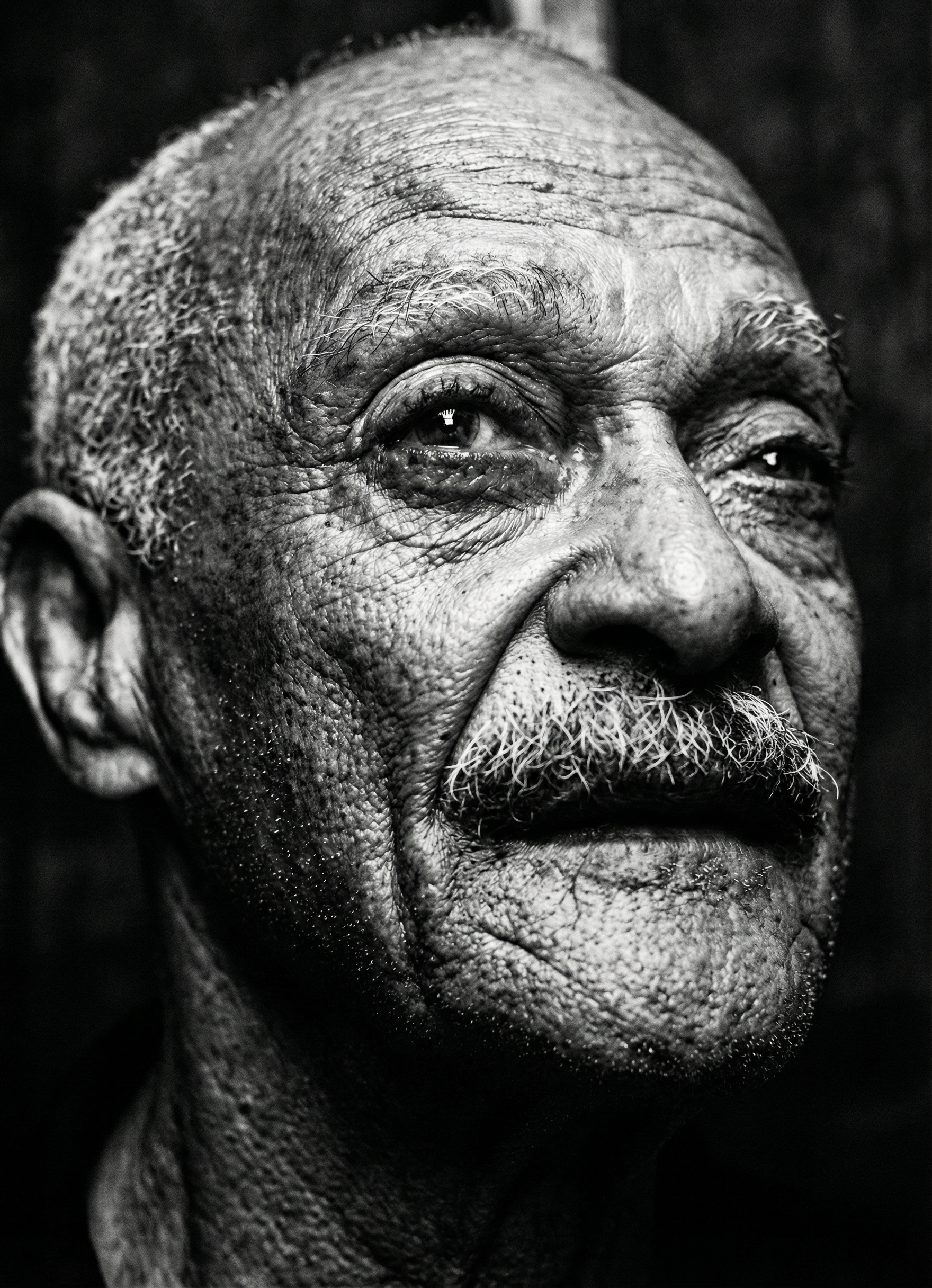
Vicente Ferreira Pastinha dedicated his life to preserving Capoeira's ancestral soul. While Bimba modernized, Pastinha protected. He emphasized slow, strategic play, ritual, philosophy, and African cultural values. He opened the first official Capoeira Angola school in Salvador in 1941 and spent decades teaching with almost nothing — often in poverty, but never without dignity.
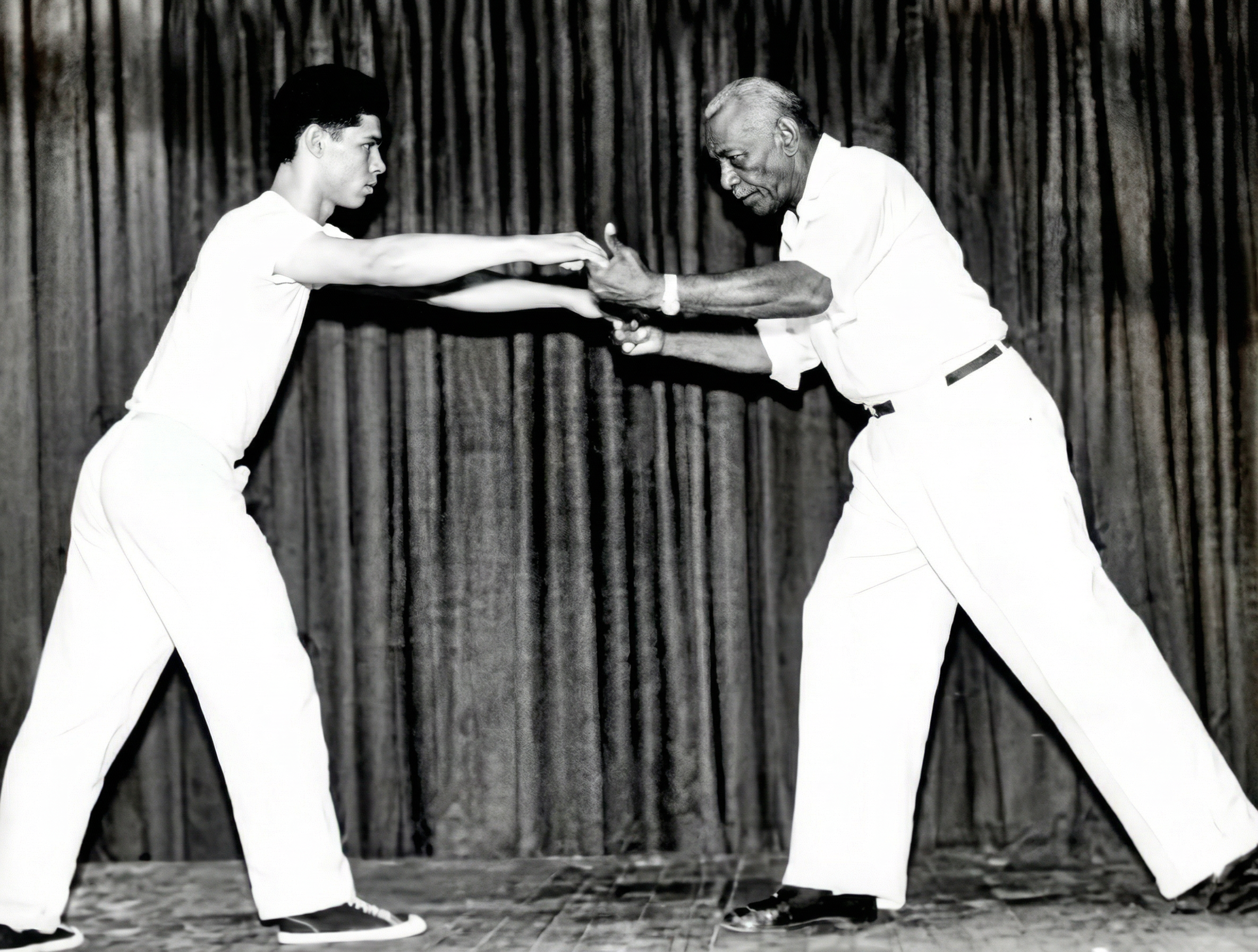
— Mestre Bimba
From Chains to the World Stage
African Roots Arrive in Brazil
Enslaved Africans bring combat traditions, ritual dances, and communal practices from West and Central Africa. Movement, music, and community are inseparable in their culture — and that integration becomes the seed of Capoeira.
Quilombo dos Palmares
Escaped enslaved people form free communities in the Brazilian interior. Capoeira becomes the training system and spiritual practice of these communities. Quilombo dos Palmares resists colonial forces for nearly 100 years.
Abolition — But No Support
Slavery ends in Brazil. The formerly enslaved receive nothing: no land, no education, no support. Capoeira moves into the cities — into ports, streets, and poor neighborhoods — as a survival tool.
Criminalized
The Brazilian Penal Code outlaws Capoeira. Practitioners face arrest, forced labor, and imprisonment. The art goes underground — passed in secret, orally, from teacher to student. It survives because people protect it.
Legalization — Bimba & Pastinha
Mestre Bimba creates Capoeira Regional and demonstrates it to the Brazilian president. Capoeira is legalized. Mestre Pastinha opens the first Capoeira Angola school. Together, they ensure the art survives without losing its soul.
Capoeira Leaves Brazil
Brazilian mestres begin traveling to Europe and North America. Capoeira starts spreading globally — first in the diaspora communities, then into mainstream culture. The world begins to discover what Brazil tried to hide.
UNESCO Intangible Cultural Heritage
UNESCO inscribes Capoeira as an Intangible Cultural Heritage of Humanity. After centuries of persecution, criminalization, and marginalization, Capoeira is officially recognized as one of the world's most important living traditions.
A Living Practice in 150+ Countries
Capoeira is practiced by millions of people across every continent. It is no longer just a Brazilian art — it belongs to anyone willing to enter the roda with respect, curiosity, and commitment. Including you.
Capoeira Is Not One Thing
Most people think Capoeira is a martial art. It is. But it is also three other things — and all four are trained at the same time, inside every class.
Awareness, distance, timing, and strategy. Capoeira does not teach domination — it teaches intelligence. You learn to read a situation before you react to it.
Flow, expression, and adaptability. There is no fixed script in the roda. You learn to stay present, move continuously, and adapt instead of freezing.
Music is not background in Capoeira. It is the engine. The berimbau sets the pace, changes the energy, and guides the entire game. You must listen before you act.
Acrobatics in Capoeira are not tricks. They are tools for building courage, body control, and self-trust. You don't jump until you're ready — and then you do.
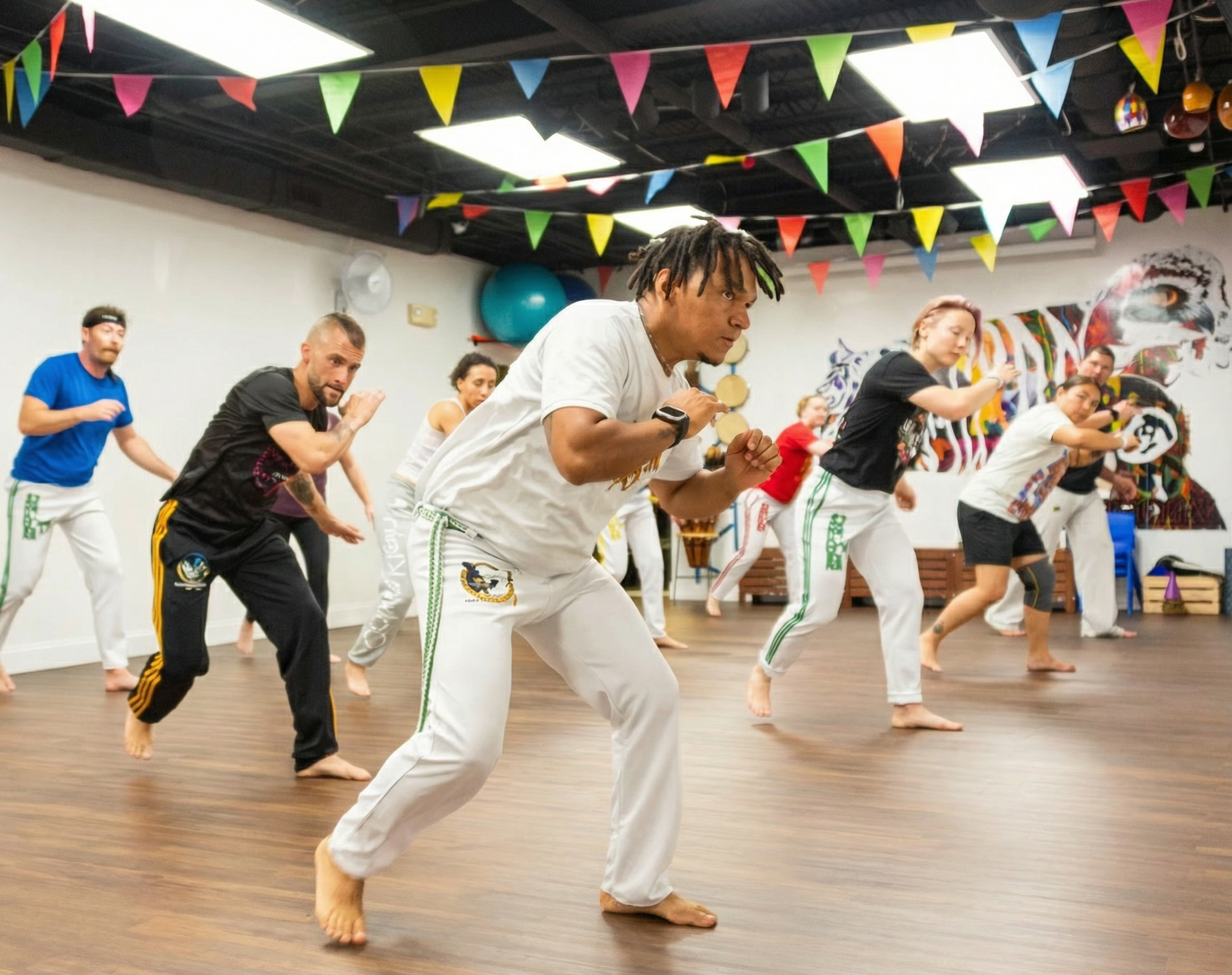
A Living Tradition — Now in Miami
Today, Capoeira is practiced in over 150 countries. In 2014, UNESCO recognized it as an Intangible Cultural Heritage of Humanity — the official acknowledgment of what practitioners have always known: this art is irreplaceable.
Evolve Miami Team was founded by Mestre Cabeção — Julio Arruda dos Santos — who began training Capoeira in São Paulo, Brazil in 1996 at the age of 10. He has spent nearly 30 years inside this tradition, and brought it to Miami to share it with a community that deserves it.
"I didn't come to Miami to teach a workout. I came to pass forward something that survived centuries of persecution because it was worth protecting."
At Evolve, we train the whole system — movement, music, culture, and community. Not as separate subjects. Together. The way it was always meant to be.
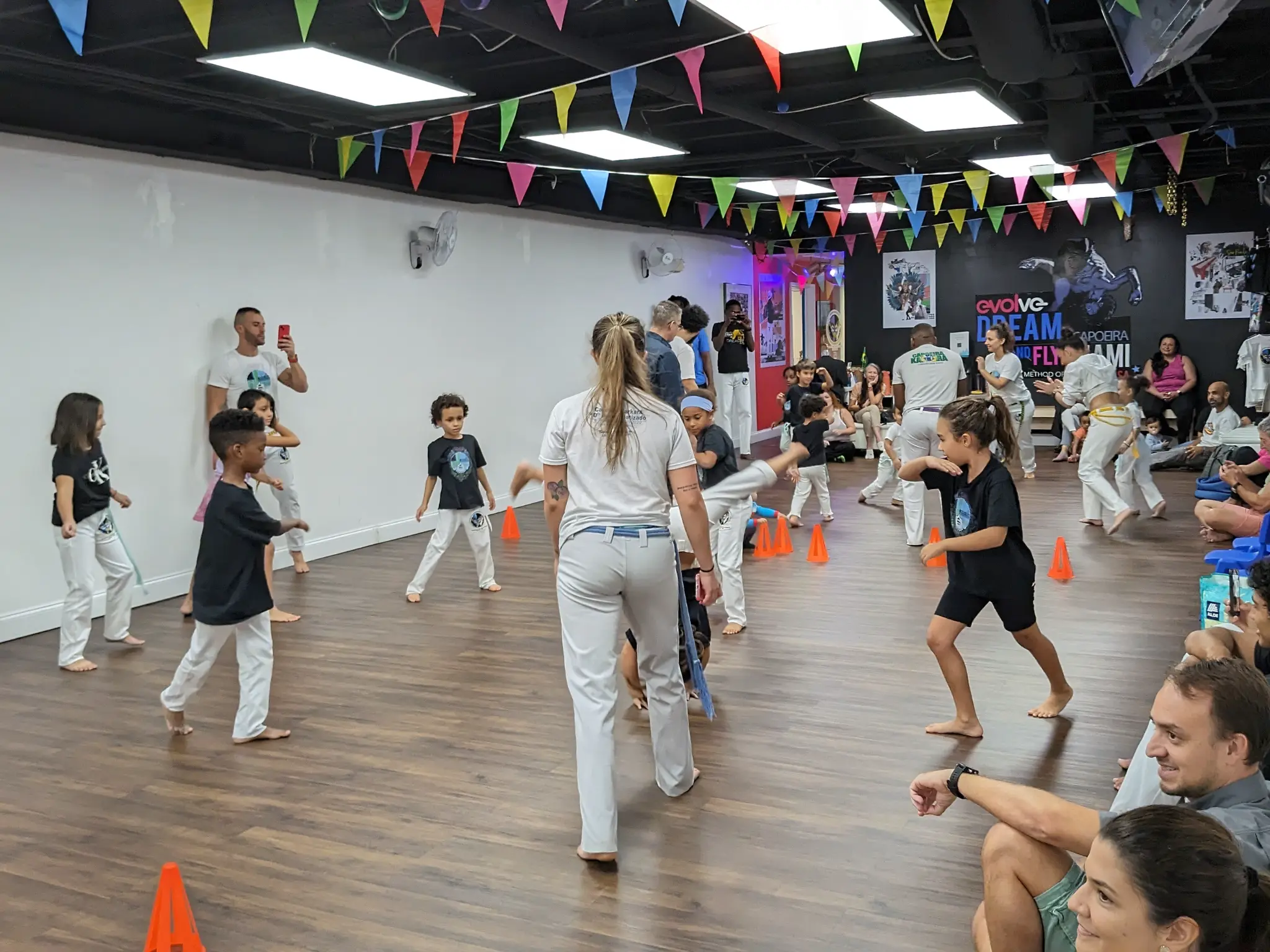
The Roda Is Open to Everyone
Capoeira was built by people who were told they did not belong. That history is why the roda is open to everyone — children, teens, adults, beginners, and experienced practitioners from other arts.
Kids build confidence, coordination, and character through play. Teens find identity, discipline, and a community that sees them. Adults reconnect with their bodies, reduce stress, and discover strength they thought was gone.
You do not need experience. You do not need to be athletic. You need to show up, be willing to learn, and respect the tradition you are entering.
You Don't Just Train. You Belong.
Capoeira was created in community and it only makes sense in community. The roda is a circle — everyone faces each other. No one is hidden. No one is isolated. You are seen.
At Evolve, people don't just train together. They grow together. Families train together. Students from 20+ countries share the same floor. The tradition that survived slavery, criminalization, and marginalization now lives in a studio in Miami — and it is stronger for it.
"People don't come to heal. They come to train. Healing happens as a consequence."
— Mestre Cabeção
The World Has Noticed
What Capoeira Actually Does to You
Not promises. What practitioners consistently experience over time — in the body, the mind, and in life.
Full-body training that builds strength, flexibility, coordination, and cardiovascular endurance — without it feeling like a workout. You move. You sweat. You get stronger.
Confidence in Capoeira is not given — it is earned. Every time you commit to a movement you were afraid of, you build trust in yourself that transfers to every other area of life.
Rhythm, movement, and community are three of the most powerful tools for nervous system regulation. Capoeira combines all three. People leave class calmer — not because they tried to relax, but because the environment supported it.
You learn Portuguese songs, African-Brazilian history, the berimbau, the atabaque. You become part of a tradition that connects you to something larger than yourself — and to people across the world who share it.
The roda is a circle. Everyone is visible. Everyone matters. For many people, Capoeira is the first place they have felt truly part of a group — not because they performed, but because they showed up.
The game teaches you to read situations, respond instead of react, stay connected while protecting yourself, and keep moving when things don't go as planned. These are not metaphors. They are skills you practice every class.
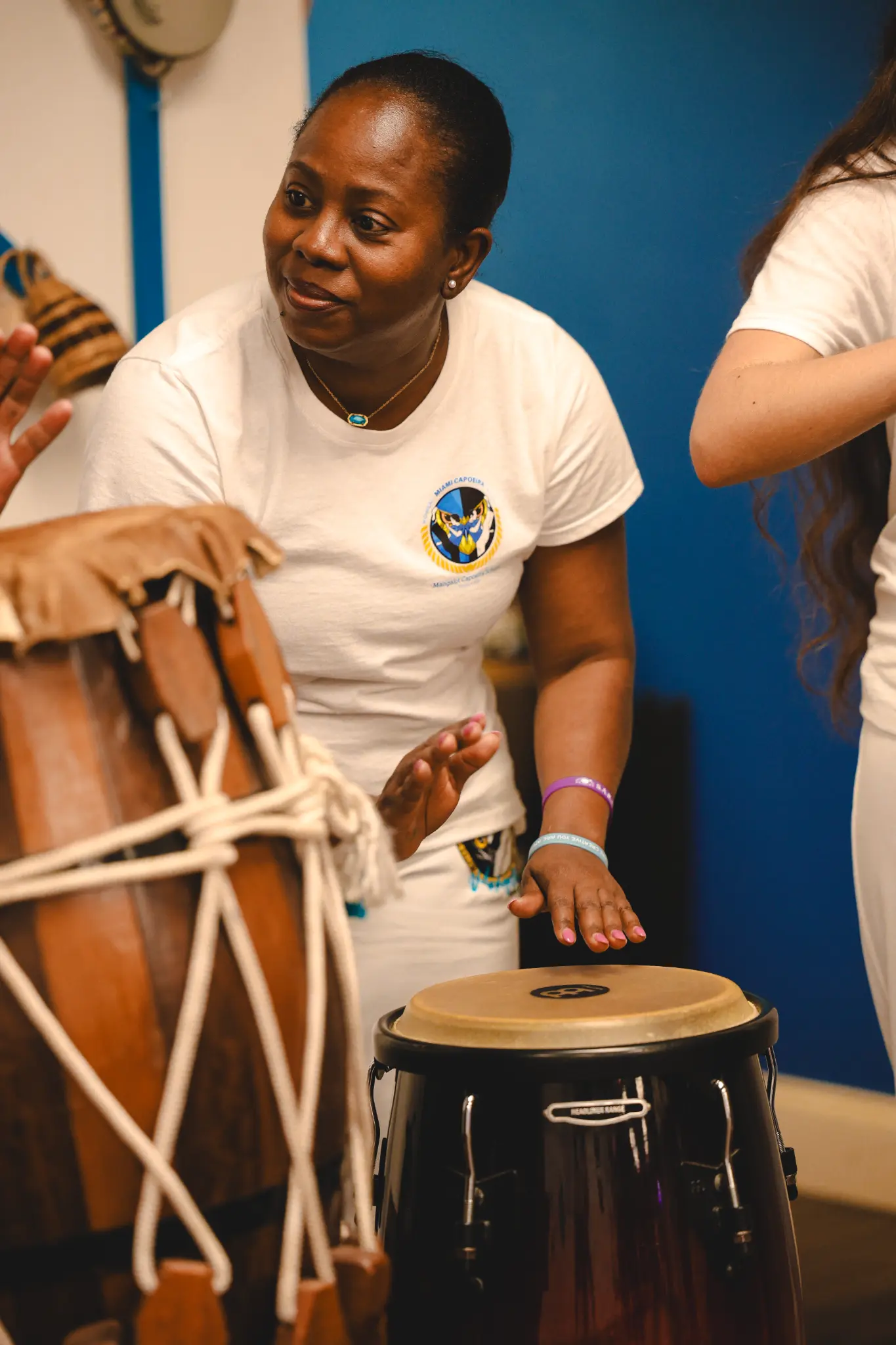
She Found Her Rhythm.
She came to learn movement. She stayed for the music. In Capoeira, the drum is not background — it is the heartbeat of the roda. Every beat is a conversation. Every rhythm is a call to move differently.
When a student picks up the atabaque for the first time and feels the sound travel through their hands, something shifts. They stop watching the game from the outside. They become part of it.
“The music doesn’t accompany Capoeira. The music is Capoeira.”
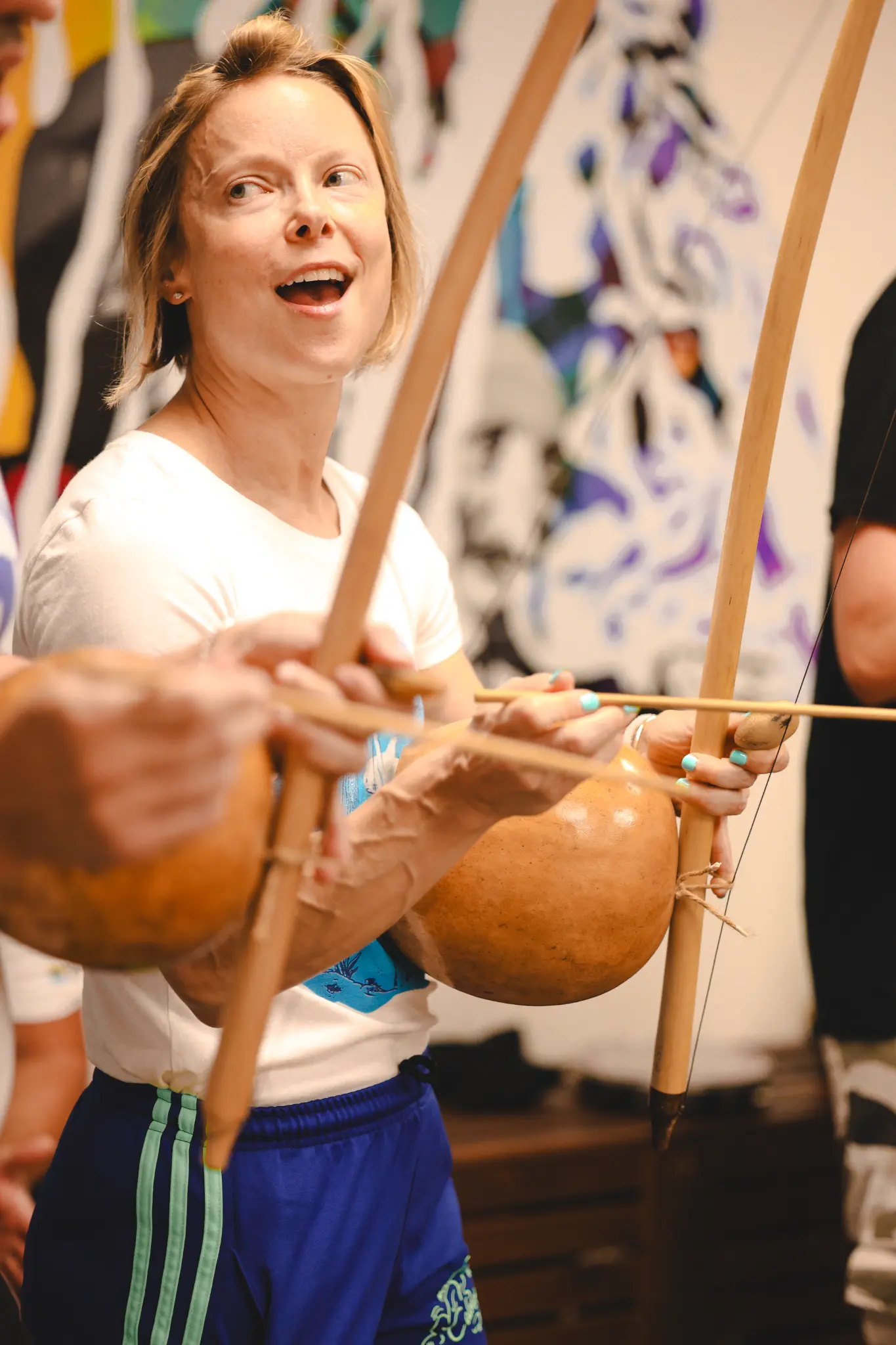
The Moment It Clicks.
There is a specific moment that every Capoeira student knows. The moment the berimbau stops feeling foreign and starts feeling like an extension of your own body. Her face says everything.
That open-mouth laugh is not performance. It is surprise — the surprise of discovering something you did not know you were capable of, and realizing that the tradition that survived centuries is now, somehow, in your hands.
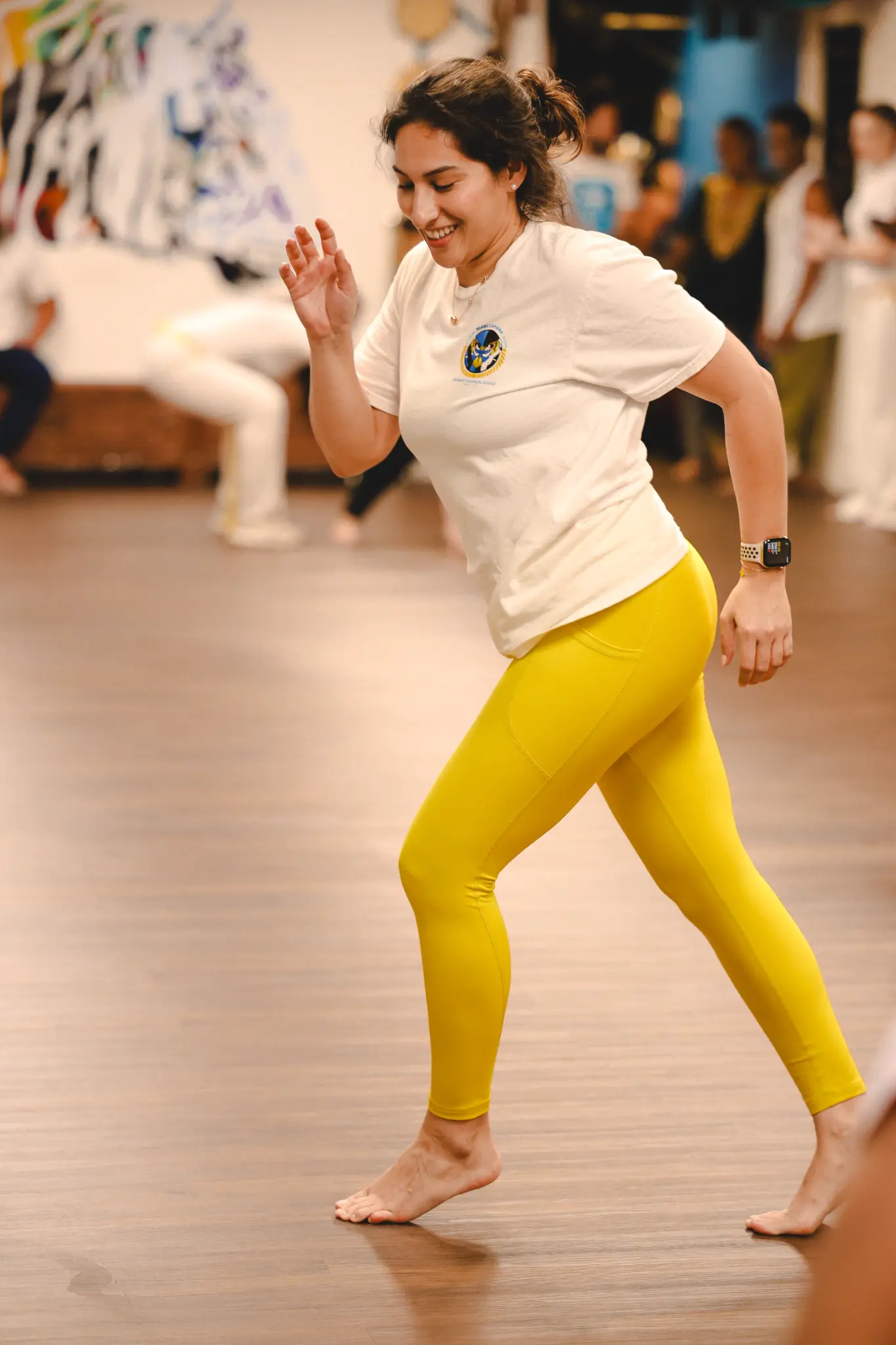
She Is Not Performing. She Is Free.
The ginga is the foundation of Capoeira — a constant swaying movement that never stops. It looks simple. It is not. It requires you to let go of self-consciousness, trust your body, and stay present in the moment.
When you see someone move like this — eyes soft, smile wide, completely inside the music — you are watching someone who has crossed a threshold. They stopped thinking about how they look. They started feeling how they move.
“Capoeira teaches you to be comfortable in your own body. That changes everything else.”
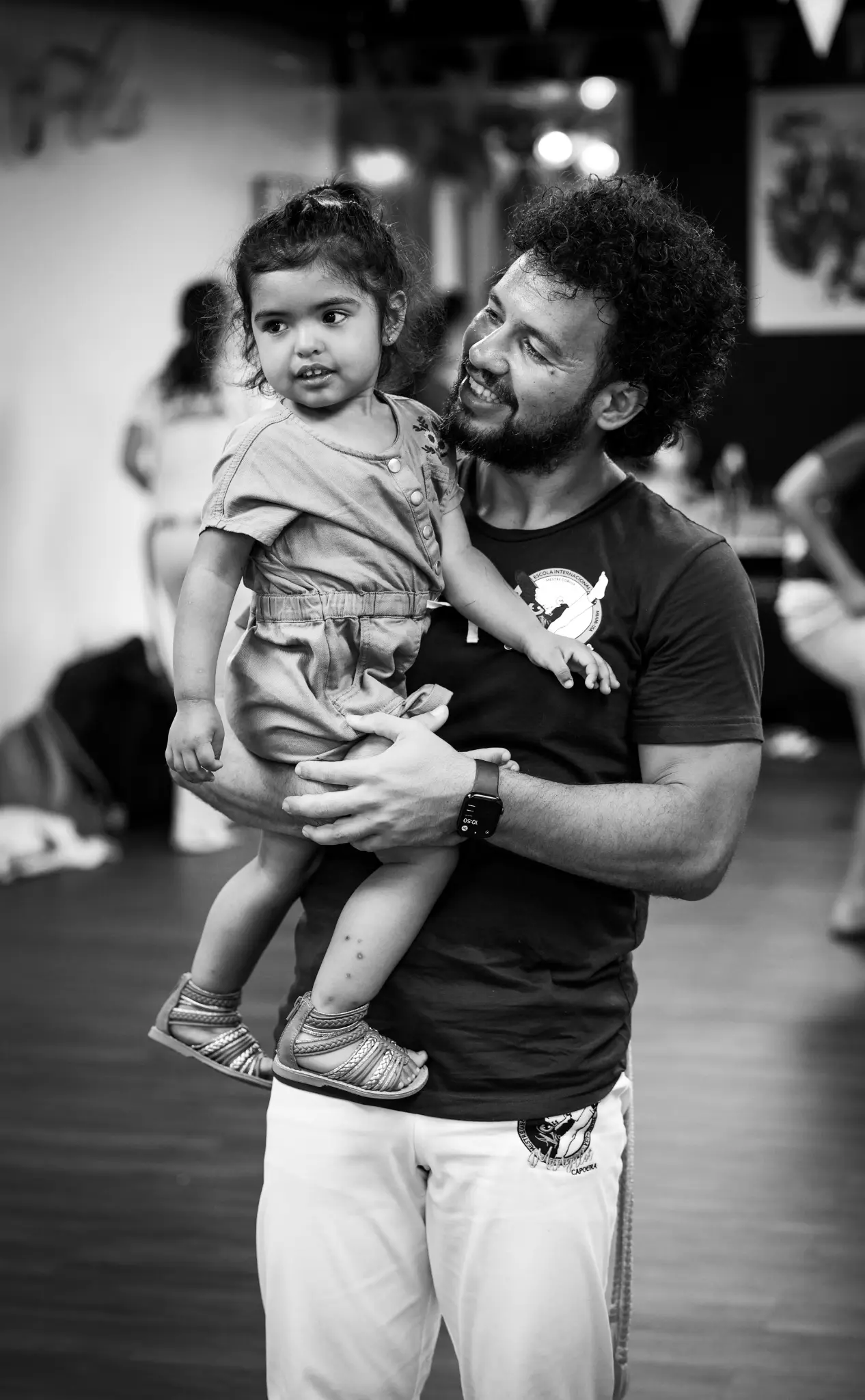
Some Things You Cannot Teach. Only Pass Forward.
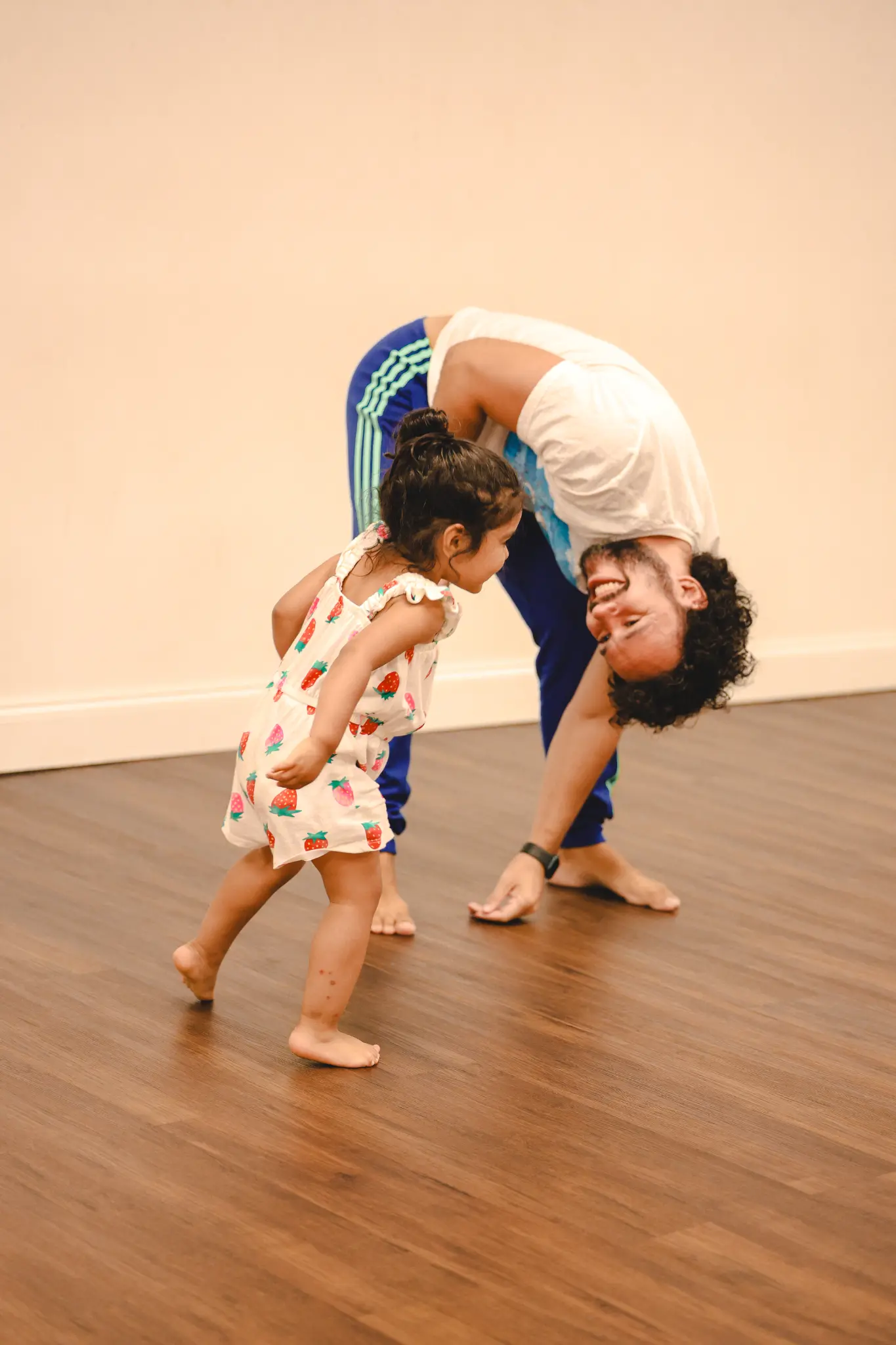
She is not old enough to ginga yet. She is not old enough to play the berimbau. But she is already inside the roda — held by someone who has spent his life inside this tradition, and who will spend the rest of it making sure it continues.
This is what Capoeira looks like when it is healthy. Not a performance. Not a product. A living thing, passed from hands to hands, generation to generation, with care.
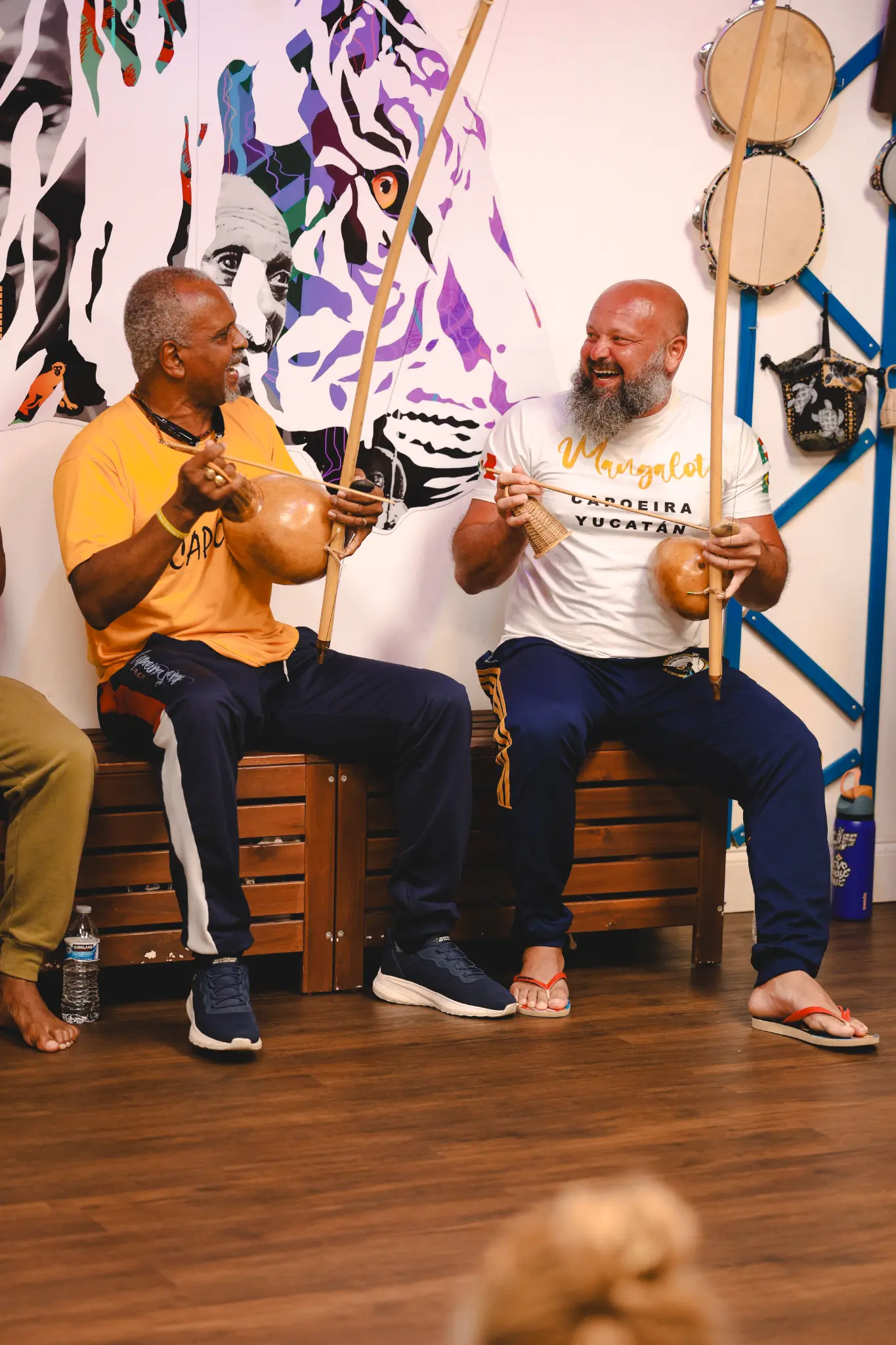
When Two Masters Meet, the Roda Grows.
Capoeira is a global language. Two practitioners from different countries, different lineages, different styles — they pick up the berimbau and immediately understand each other. No translation needed.
This is what 500 years of survival looks like. Not in a museum. Not in a textbook. In two men, laughing, playing, sharing the same tradition that enslaved people created in secret so that something of themselves would survive.
“The roda is a circle. Everyone who enters it is connected — to each other, and to everyone who played before them.”
Now You Know
What You're Entering.
Capoeira survived 500 years of oppression, criminalization, and marginalization because it was worth protecting. It is still here. It is still alive. And the roda is open.