

Golpes — Attacks
Capoeira is a fast, versatile martial art. Learn the kicks that define the game — from simple front kicks to the iconic spinning heel strike.
Back to ProgramMartial Art
Golpes — Attacks
Capoeira originated within as a product of the Angolan tradition of "Engolo" but became applied as a method of survival known to slaves. It was a tool with which an escaped slave, completely unequipped, could survive in hostile, unknown land and face the hunt of the capitães-do-mato — the armed and mounted colonial agents charged with finding and capturing escapees.
Capoeira is a fast and versatile martial art historically focused on fighting outnumbered or at a technological disadvantage. The style emphasizes using the lower body to kick, sweep, and take down aggressors, using the upper body to assist those movements and occasionally attack as well.
It features a series of complex positions and body postures meant to be chained in an uninterrupted flow — to strike, dodge, and move without breaking motion, conferring the style with a characteristic unpredictability and versatility.
Players have the freedom to create a dialogue, especially with attacks and counter-attacks. The possibilities remain infinite — but we must maintain respect for our partner's safety at all times.
- The 6 categories of capoeira attacks
- Ponteira — the front kick
- Meia Lua de Frente — crescent kick
- Queixada — reverse crescent kick
- Entradas & Fintas — setups and fakes
- Armada — spinning inside-to-outside kick
- Meia Lua de Compasso — the signature heel kick
- How to combine kicks with the ginga
- 9 video lessons with guided practice
How Many Ways Are There to Attack?
6 Categories of Attack
We can attack with the hands, elbows, knees, feet, and even the head. Attacks can be frontal or spinning. We also use takedowns, locks, and throws.
Capoeira Signature Move
While capoeira has been influenced by other art forms, there are many movements unique to capoeira. One of these is the Meia Lua de Compasso. You may have seen this kick in movies or used in the ring by MMA fighters. It is a powerful kick that can do a lot of damage if applied in exactly the right position at the right time. It takes a lot of training to master this kick in a capoeira game.
Kicks can be used in sequence with cartwheels (aus) and other acrobatic moves, combining attacks and escapes.
Kick 1 · Frontal
Ponteira
Ponteira is a simple front kick with the ball of the foot.
This kick can be very dangerous, so it is only used to help gain flexibility. Always practice with control and respect for your partner.
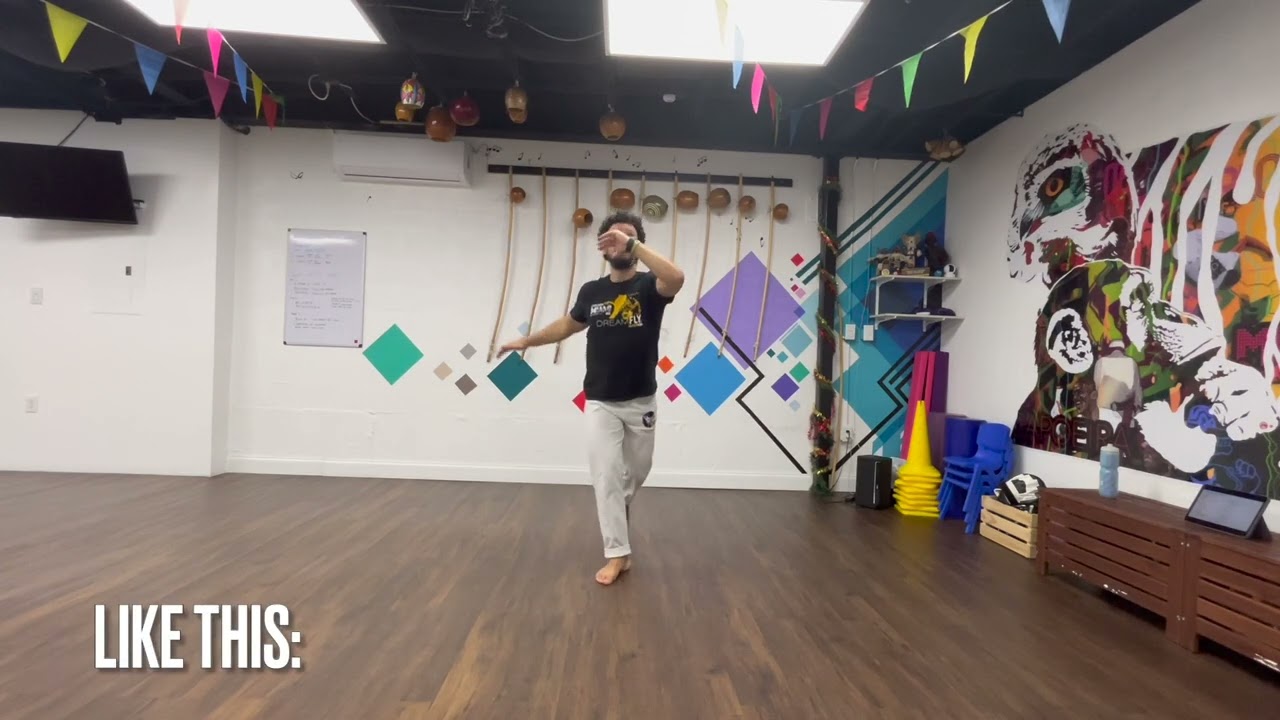
Learn the front kick with the ball of the foot — a flexibility and range tool in capoeira.
Kick 2 · Spinning
Meia Lua de Frente
Meia lua de frente means "half moon to the front." This is an outside-to-inside crescent kick — the leg swings in a wide arc from the outside inward, striking with the instep or heel.
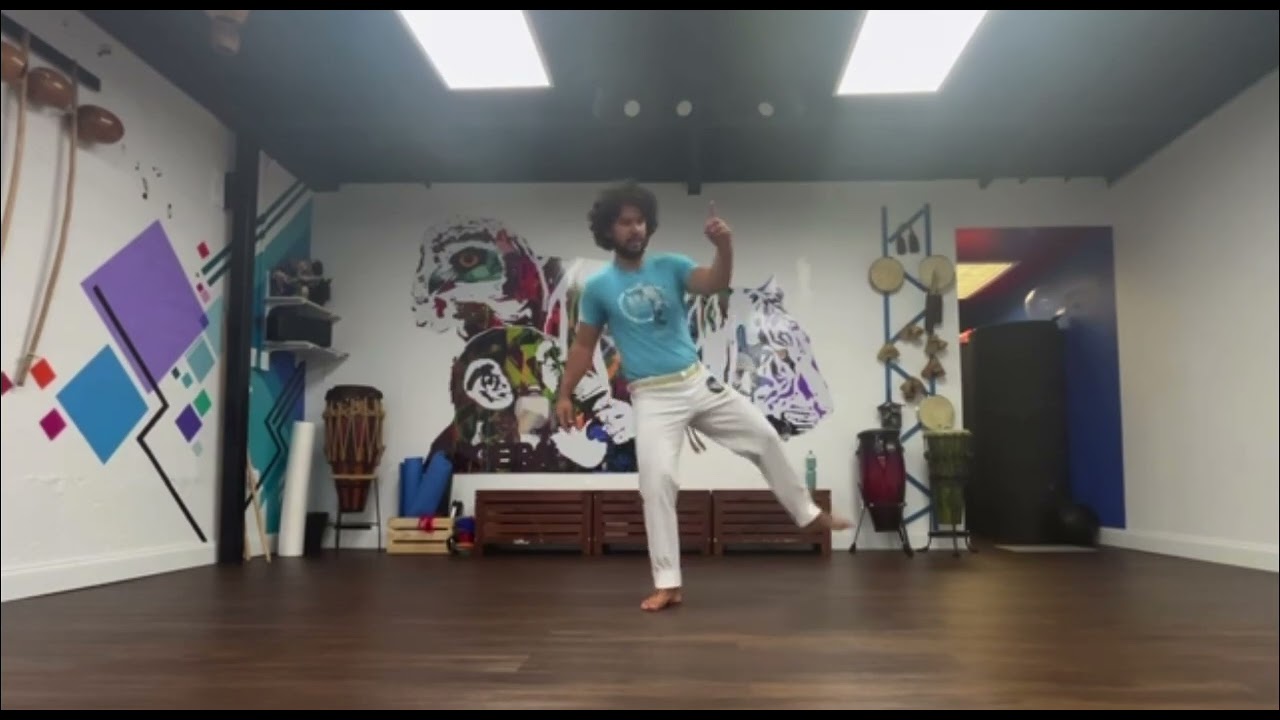
The outside-to-inside crescent kick — one of the most fundamental kicks in capoeira.
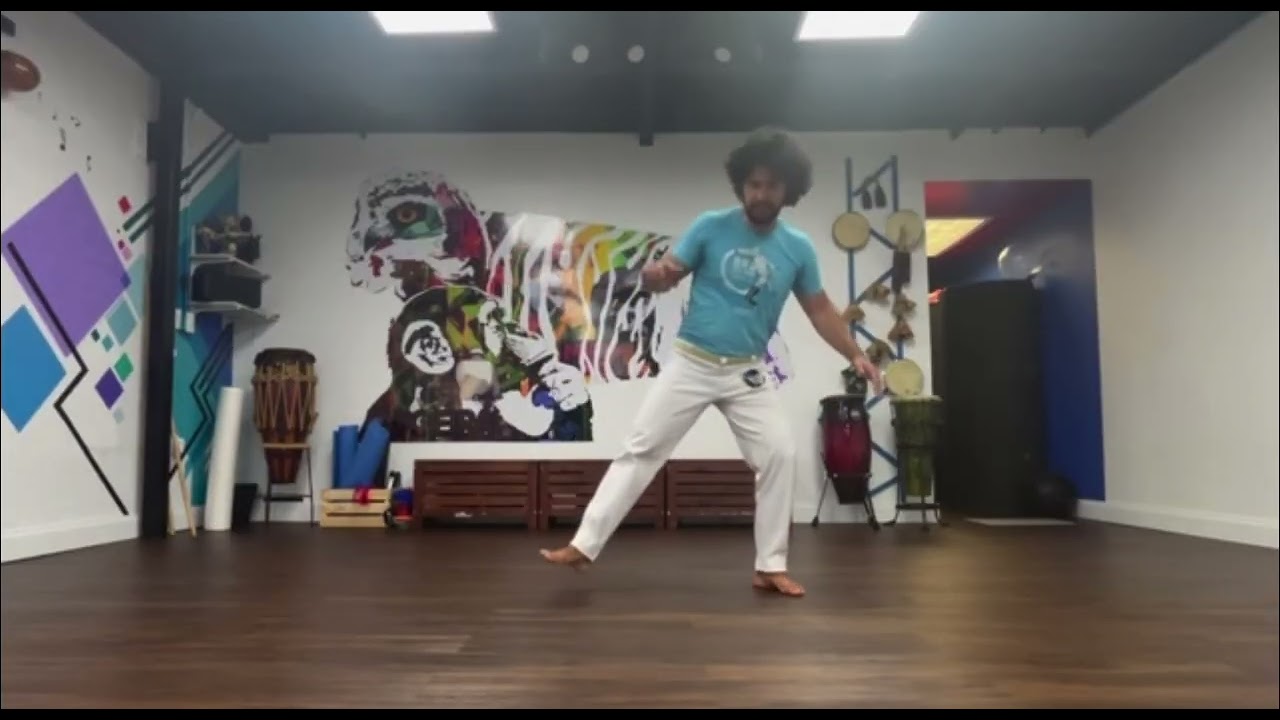
The stepping-forward variation — close the distance while delivering the crescent kick.
Kick 3 · Spinning
Queixada
Queixada is the opposite of meia lua de frente: an inside-to-outside crescent kick. The leg swings from the inside outward, striking with the heel or outside of the foot. It is often thrown from the back foot, creating a powerful rotation.
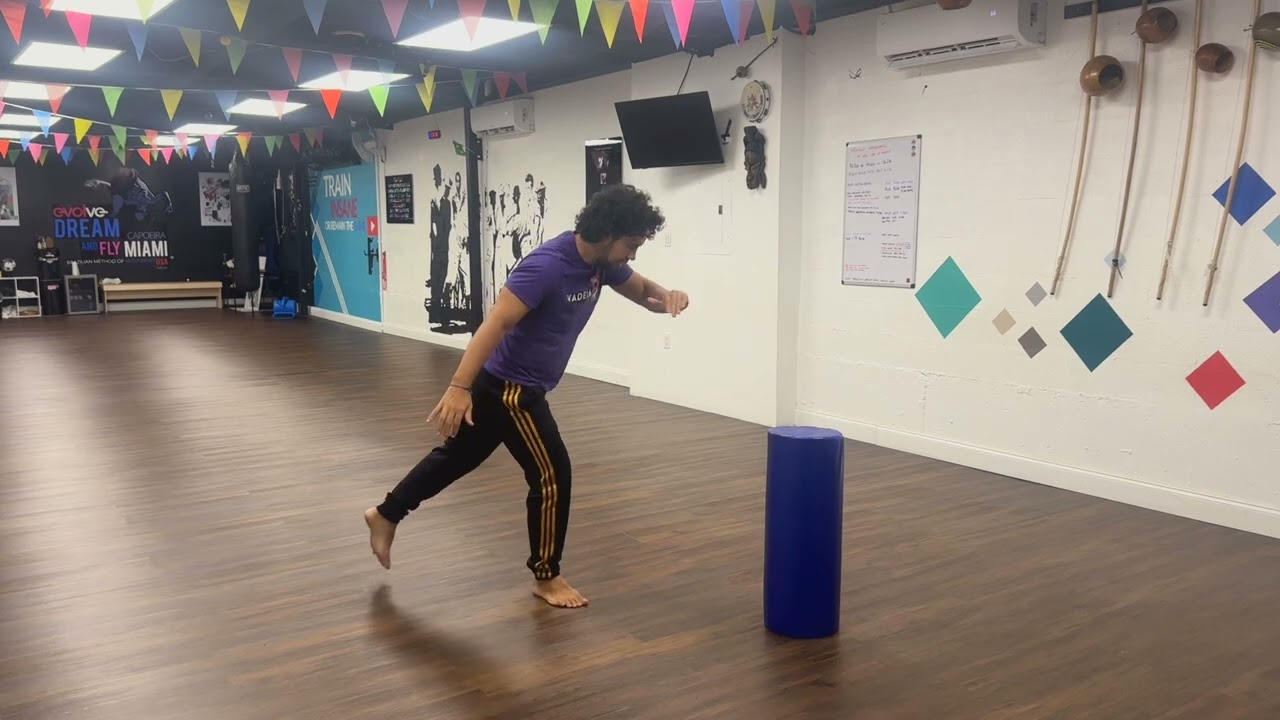
The inside-to-outside crescent kick — the mirror image of meia lua de frente.
Setup Moves
Entradas & Fintas
Almost the same move but with a different intention.
Entrada — Entrance
The steps you do before the movement to set up and position yourself to execute the kick with maximum power and efficiency.
Finta — Fake
When you fake a move to convince your partner to react, then do something else instead — tricking them into a vulnerable position.
While kicks can be used to attack, they can also be used as a trap for another attack. The entrada is not just a setup — it is a weapon in itself.
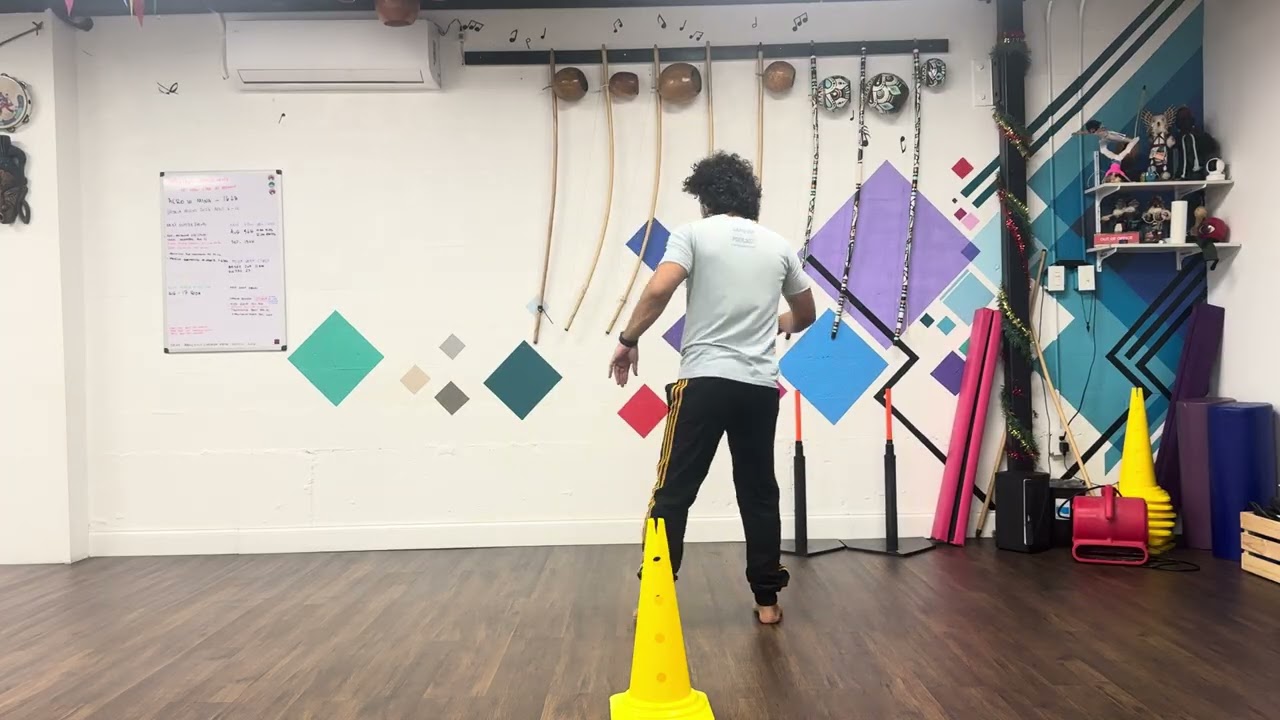
The step that comes before the armada — perfect for working spinal mobility and generating momentum.
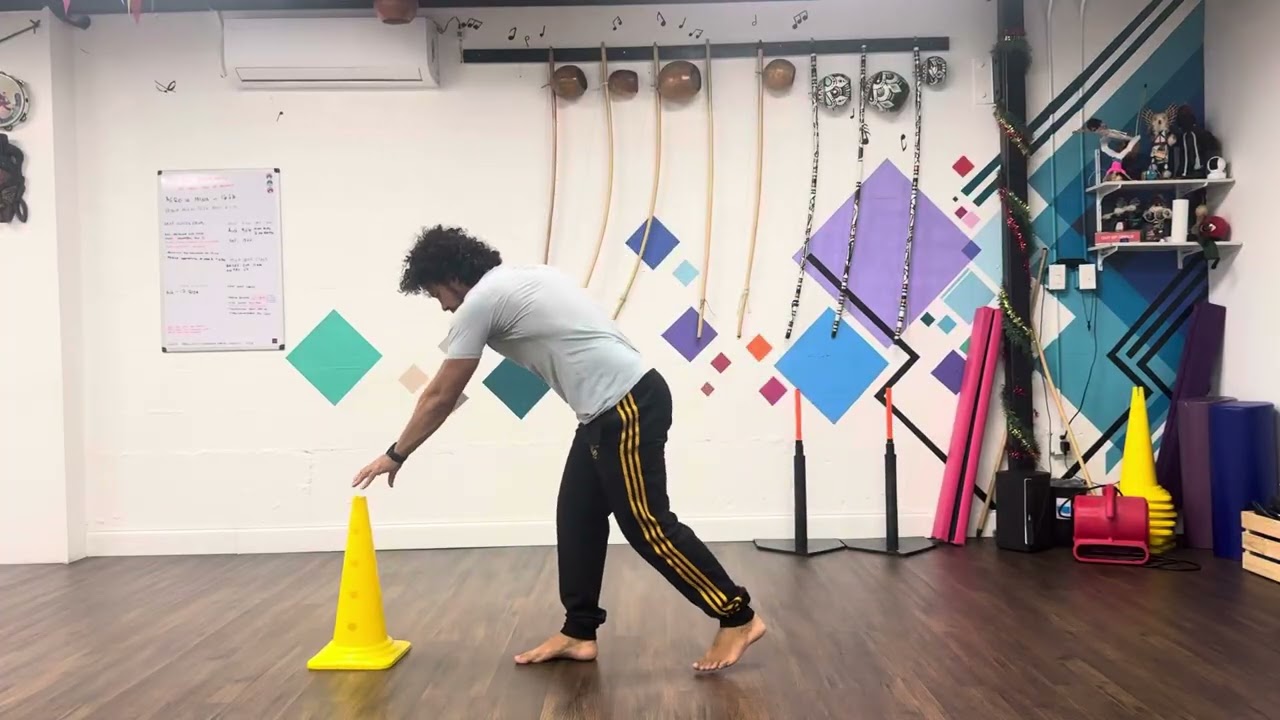
The setup step for the MLC — a great drill for spinal mobility and body rotation.
Kick 4 · Spinning
Armada
Armada is a spinning inside-to-outside crescent kick. Queixada and armada are essentially the same kick once the leg is released, but the entrance is different. Armada begins with one or two steps used to turn the body and generate momentum.
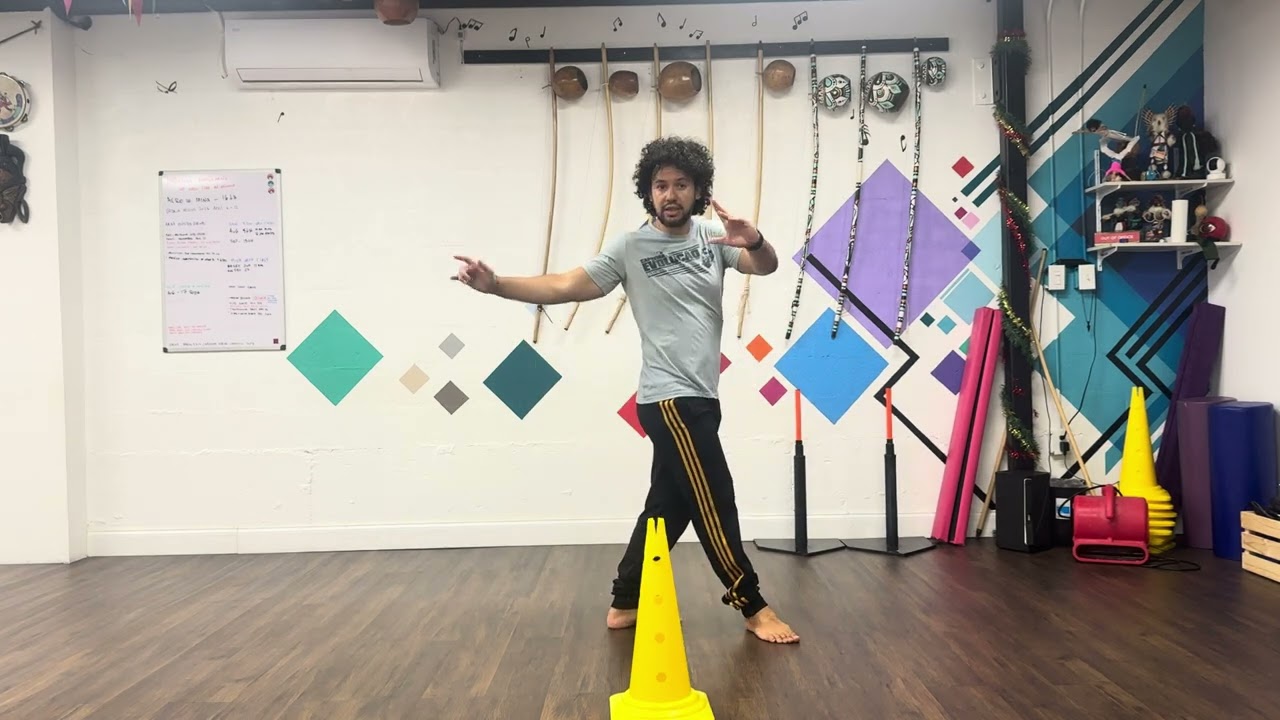
The spinning crescent kick — uses body rotation and momentum to generate power.
Combination
Meia Lua de Frente + Armada
One of the most common kick combinations in capoeira. The meia lua de frente sets up the distance and timing, and the armada follows immediately with a spinning strike. Practice this combination until the transition is seamless.
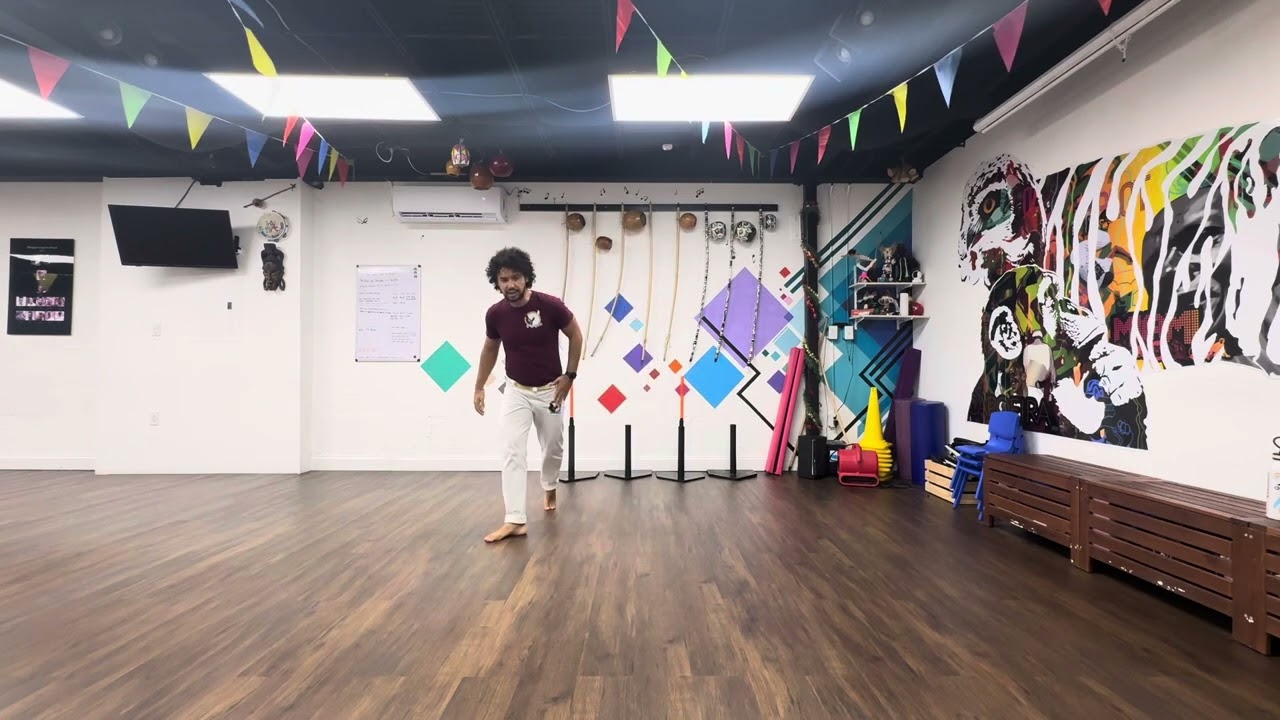
A classic two-kick combination — learn to chain these kicks fluidly from the ginga.
Kick 5 · Signature Move
Meia Lua de Compasso
Meia lua de compasso (half moon compass) is an attack that embodies the true element of capoeira: it combines an evasive maneuver with a spinning kick. Hands on the floor provide a firm base for the leg to whip around, using the heel to strike your opponent.
Meia lua de compasso demands a little bit more flexibility. Take your time to work on your weak points.
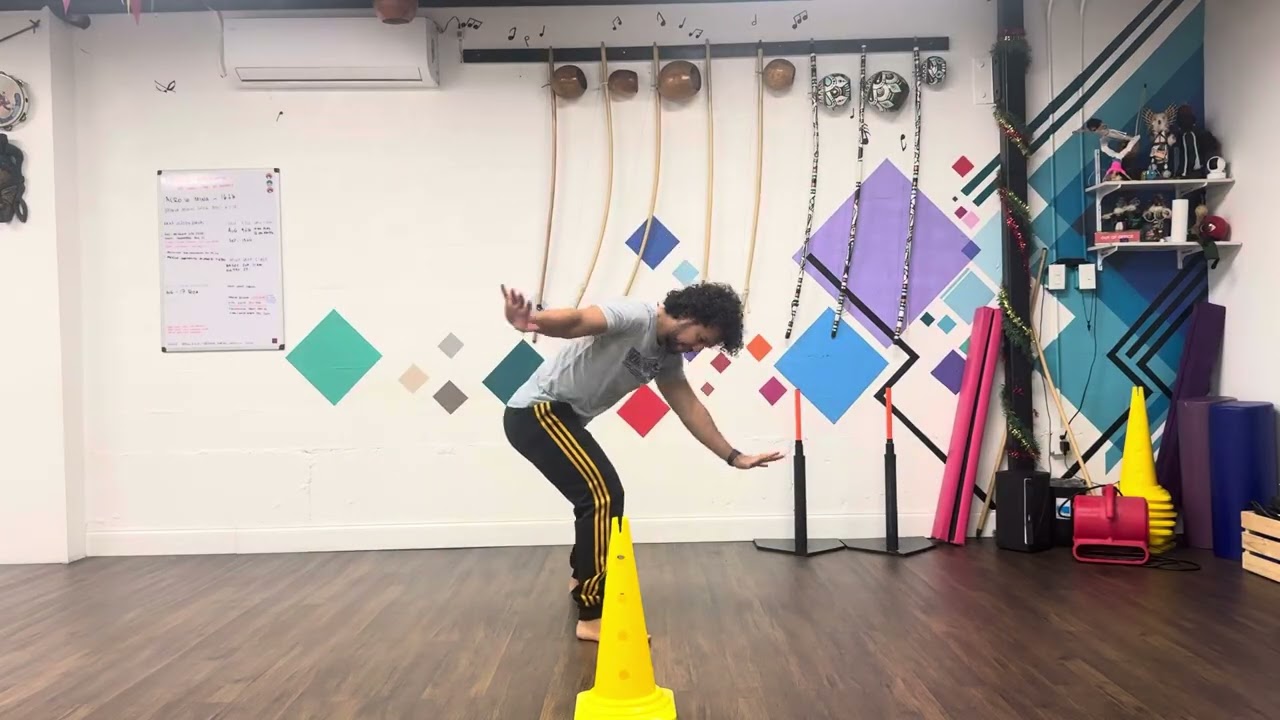
The iconic capoeira heel kick — combines evasion and attack in one powerful spinning motion.
All Kicks
The 5 Core Kicks
Tap each kick to review the key technique points. Master all five and you'll have a complete attacking vocabulary.
A simple front kick using the ball of the foot. Used primarily for flexibility training and range finding.
- Strike with the ball of the foot, not the toes
- Keep the supporting leg slightly bent
- Arms protect the face during the kick
- Use with control — this kick can cause injury
An outside-to-inside crescent kick. The leg swings in a wide arc from outside inward, striking with the instep or heel.
- Swing the leg from outside to inside in a wide arc
- Hip rotation drives the power of the kick
- Keep the kicking leg extended throughout
- Can be thrown from the back foot or stepping forward
The opposite of meia lua de frente — an inside-to-outside crescent kick, striking with the heel or outside of the foot.
- Leg swings from inside to outside
- Often thrown from the back foot with a pivot
- The body turns away from the opponent as you kick
- Pairs naturally with meia lua de frente in combinations
A spinning inside-to-outside crescent kick. Same as queixada once the leg is released, but the entrance uses 1–2 steps to generate rotational momentum.
- Use 1–2 steps to turn the body and build momentum
- The spin generates the power — not muscular force
- Strike with the heel or outside of the foot
- Keep eyes on your partner throughout the spin
The signature capoeira kick. Hands on the floor provide a firm base as the leg whips around in a powerful spinning heel strike.
- Both hands go to the floor to create a stable base
- The body pivots low as the leg whips around
- Strike with the heel — not the ball of the foot
- Requires flexibility — work on your weak points
- Combines evasion and attack in one movement
Practice
Kicks from the Ginga
Practice until you can smoothly execute all the kicks starting from the ginga, then return back to the ginga, switching sides without getting confused or missing any steps.
Intro Program Book created by M. Cabeção to assist students through the learning process.
Ponteira — Front Kick
A simple front kick with the ball of the foot. Used primarily for flexibility training — practice with control.
Meia Lua de Frente
The outside-to-inside crescent kick — one of the most fundamental and versatile kicks in capoeira.
Meia Lua de Frente Avançando
The stepping-forward variation — close the distance while delivering the crescent kick.
Queixada
The inside-to-outside crescent kick — the mirror image of meia lua de frente, often thrown from the back foot.
Entrada de Armada
The setup step before the armada — perfect for working spinal mobility and generating rotational momentum.
Entrada de Meia Lua de Compasso
The setup step for the MLC — a great drill for spinal mobility and full-body rotation.
Armada — Upright Spinning Kick
A spinning inside-to-outside crescent kick — uses 1–2 steps to generate rotational momentum before releasing the leg.
Meia Lua de Frente + Armada
A classic two-kick combination — the MLF sets up the distance and timing, the armada follows with a spinning strike.
Meia Lua de Compasso
The iconic capoeira heel kick — hands on the floor, body pivots low, leg whips around in a powerful spinning strike.